China’s central bank adds local government bonds into calculation for social financing
People’s Bank of China widens scope of indicator to reflect sharp rise in issuance of debt instruments in recent months

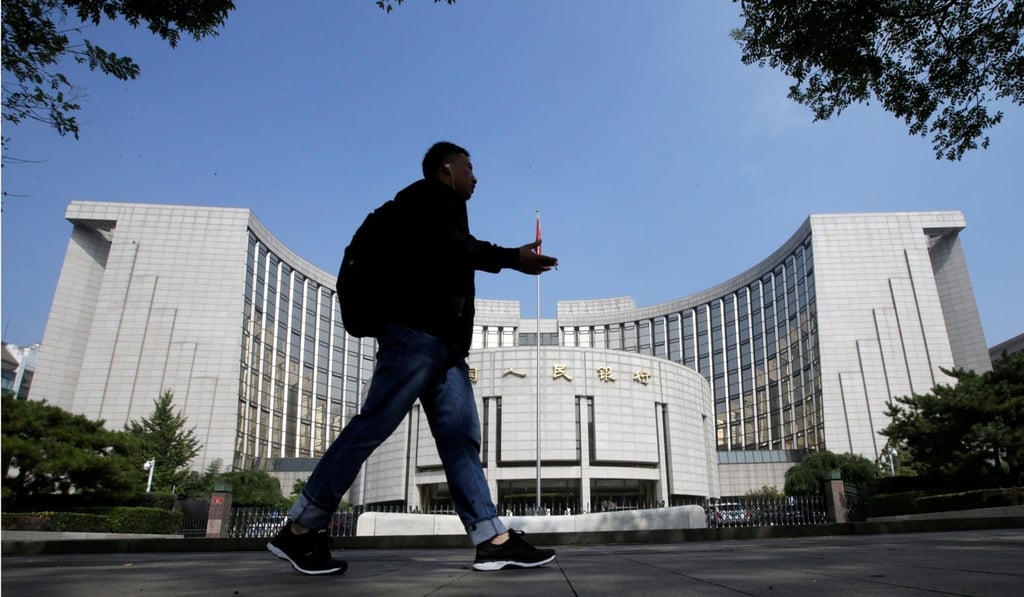
China’s central bank has changed the way it calculates how much money flows into the real economy to reflect recent changes in the availability of local government funding.
Total social financing – a figure calculated monthly that previously comprised bank loans, corporate bonds and initial public offerings – is one of the most watched indicators as it provides a reading of how much money is flowing from the financial system into factories, infrastructure projects, farms and shops. If the number is growing, it is largely seen as the central bank loosening its policy stance and a pointer to stronger economic activity in the months ahead.
However, the People’s Bank of China (PBOC) said on Wednesday that it has widened the definition of the indicator to include special purpose bonds issued by local governments – a type of financing the central government has strongly encouraged regional authorities to use in recent months to offset the negative effects of the trade war with the United States.
As a result, the September figure for total social financing – including 738.9 billion yuan (US$106.84 billion) worth of special purpose bonds – was 2.21 trillion yuan, up from 1.52 trillion yuan in August. Without the bonds added, the figure would have been 1.47 trillion yuan.
The revised calculation method made economists’ forecasts for September’s social financing effectively meaningless. The median figure in a Bloomberg poll of 24 economists was 1.53 trillion yuan.
The central bank did not send any warning of the change before releasing the data, but said in a statement later that the decision was taken because there had been a sharp increase in the issuance of special purpose bonds in recent months.