China seeks to fuel economic growth with coal mines and airport projects worth over US$15 billion
- Four mines in the north of the country will produce enough coal in one year to equal the United Kingdom's entire consumption for 18 months
- New airport in Hohhot, the capital city of Inner Mongolia, will cost US$3.28 billion as Beijing seeks to boost its slowing economy amid the US-China trade war

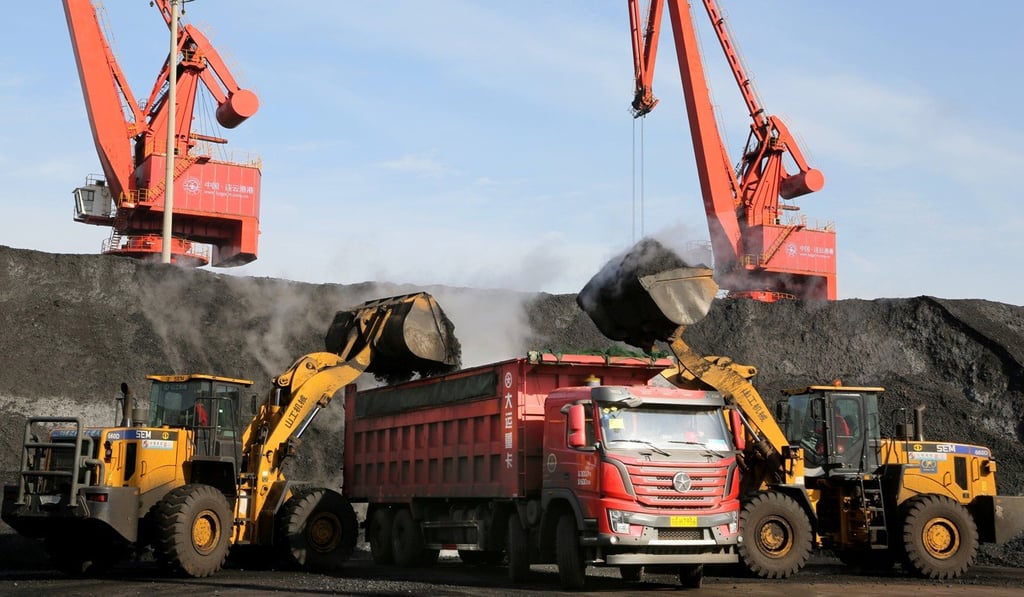
China approved four coal mines in a single day on Tuesday as part of its effort to boost its ailing economy, with the combined output capacity equal to the United Kingdom's entire coal consumption for 18 months.
The four projects in the north of the country, two in inner Mongolia and one each in Xinjiang and Shaanxi, will cost 11.7 billion yuan (US$1.75 billion) and will have the combined annual output capacity of 26 million tonnes.
The approval of the new coal mines suggests the government is also stepping back from its pollution control efforts, at least in part, to help boost growth.
Two weeks ago the National Development and Reform Commission (NDRC), the agency that approves all large infrastructure and industrial project in China, also approved three new airport projects costing 71.77 billion yuan (US$10.71 billion).
It is all fresh evidence that Beijing is increasingly leaning toward large-scale stimulus to bolster growth, a playbook that the Chinese government had used a decade ago to handle the impact from the global financial crisis.