Greater Bay Area creates uncertain future for China’s largest fabric market and its 100,000 employees
- Guangzhou’s Zhongda market with its 20,000 merchants is being relocated 100km away to Qingyuan to make way for Beijing’s grand technology plan
- The five square kilometre market, one and a half-times the size of New York’s Central Park, is being replaced by an international innovation centre to rival Silicon Valley

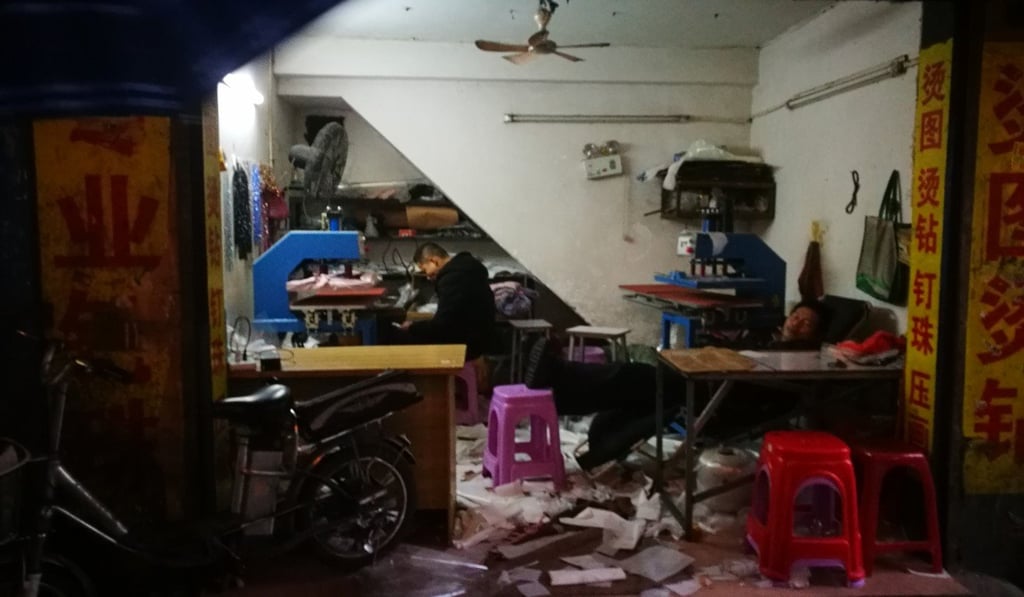
Inside a small, dark and cramped residential building in Lujiang, a lively and gritty urban village in the southern city of Guangzhou, Li Hua and other women migrant workers sew beads and plastic diamonds onto skirts.
Uppermost in their minds though, is the uncertain future of their shabby, hidden workshop, where they have been living and working for years.
Zhongda wholesale fabric market has found itself in trouble because officials plan to tear it down and replace it with a new hi-tech development centre to fulfil the government’s increasingly urgent push to make innovative industries a priority. But several thousand small processing workshops and factories located in the sprawling market will likely collapse and disappear if plans to relocate them proceed.
The fate of Zhongda market is one example of China’s rapid urbanisation, and particularly the upgrading of the country’s top-tier cities, with wholesale markets increasingly viewed as a liability and an eyesore instead of an asset for municipal authorities. In Beijing, for example, the local government has shut down many wholesale markets, including the iconic Beijing Zoo clothes market, to reduce traffic congestion and to phase out low-end businesses.
While places like Zhongda market offer jobs to up to 100,000 people and are essential for many small factories, municipal officials see better uses of the land – an increasingly expensive resource in Chinese cities – for office towers, shopping malls, residential buildings, or hi-tech parks.