Nobel Prize winner Richard Thaler says China should use ‘nudge theory’ to improve the lives of citizens
- ‘Nudging’ proposes the use of positive reinforcement and indirect suggestion to influence behaviour and decision making
- Examples include creating an app to help drivers with navigation or a congestion tax in a city to reduce air pollution

More carrot and less stick would help China achieve better results from government policies and services to improve the lives of its citizens, according to Nobel Prize-winning economist Richard Thaler.
Thaler coined the term “nudging ” for the theory of ways to influence individual and group behaviour without coercion through the use of positive reinforcement and indirect suggestions in contrast with other ways to achieve compliance, such as enforcement.
However, Thaler warned that some companies have used nudging purely for their own profit and not in their customers’ best interests, while some unspecified governments have employed the theory to set policies that do not benefit their citizens.
“I would think that any government would want to achieve its goals as effectively as possible,” said Thaler, a professor of behavioural science and economics at The University of Chicago Booth School of Business. “Whatever the problem is that China’s government is trying to solve, then thinking about it through this kind of lens would help.”
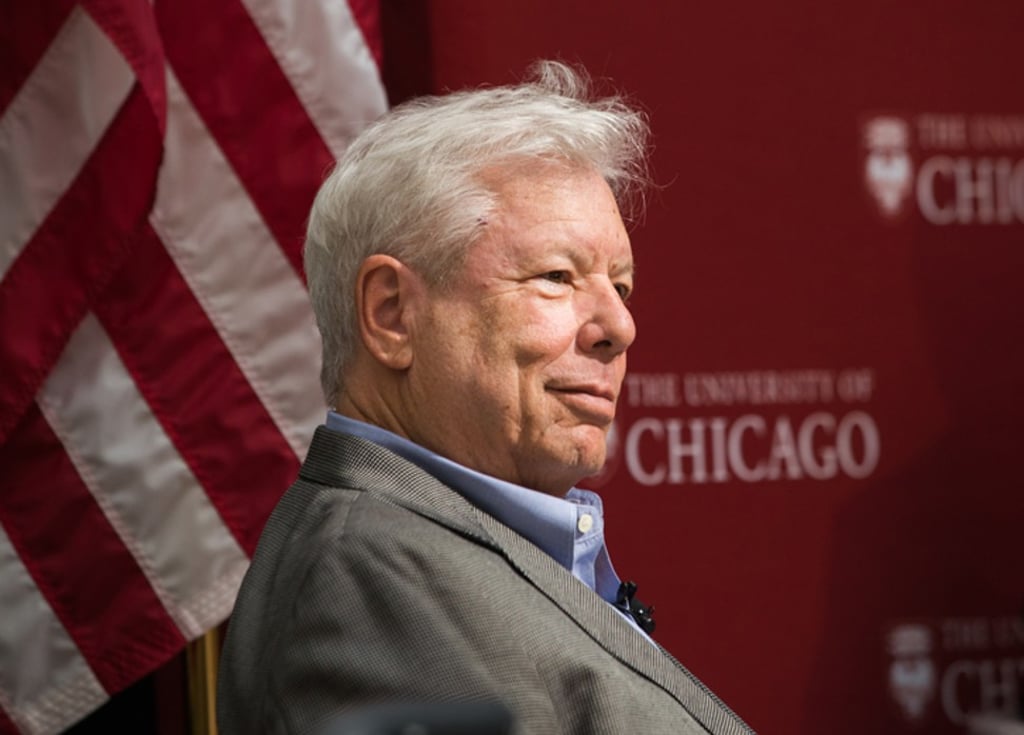
“Nudge for good is meant as a plea and not necessarily an expectation,” added Thaler, who received the Nobel Memorial Prize in Economic Sciences in 2017 for his contributions to behavioural economics, which incorporates the understanding of common mistakes people make during the decision-making process.