China’s middle class stress over debt payments as unemployment hits two-year high
- China’s unemployment rate jumped to 5.3 per cent in January and February from 4.9 per cent in December, the highest level in two years
- Household debt, which includes mortgage and credit cards, now makes up 52 per cent of China’s gross domestic product

When Tan Jinqiao, a 27-year-old product manager with a Beijing-based fintech firm, was asked to leave his job in February, one of his first thoughts turned to making his car payment of almost half his monthly salary.
Tan is among the growing number of China’s middle class population that is facing rising unemployment and household debt as the nation’s economy is growing at its slowest rate in three decades amid the trade war with the United States that has weakened consumer and investment confidence.
Estimates of the size of China’s middle class vary, depending on the definition, but China’s national statistics agency puts the figure at nearly 400 million, less than a third of the population, by defining a middle-class household as one making a fairly low threshold of 25,000 yuan (US$3,722) to 250,000 (US$37,224) yuan a year.
The nation’s large technology firms such as e-commerce company JD.com, ride hailing app Didi and internet firm NetEase, which mainly focus on the consumer market, are among the first to have began redundancy and restructuring plans.
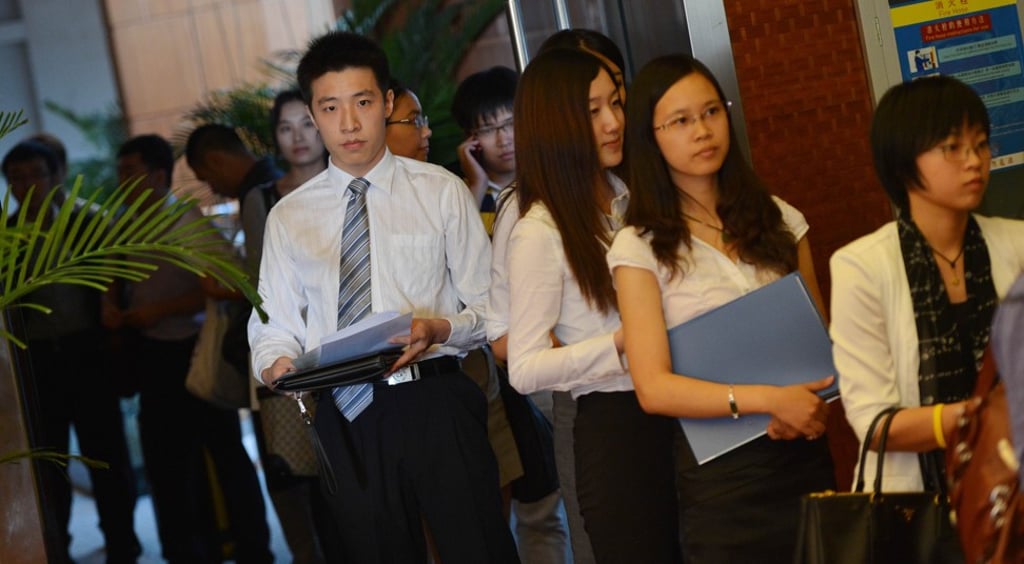
China’s unemployment rate jumped to 5.3 per cent in January and February from 4.9 per cent in December, the highest level in two years.
China's rising unemployment adds to the economic woes of a shrinking labour force, which had declined every year since its 2011 peak to 897.3 million in 2018, with 775.9 million people employed.