China’s robot makers are hooked on subsidies, highlighting another red line in US-China trade war
- Mentions of ‘Made in China 2025’ may have disappeared, but Beijing and local governments continue to subsidise emerging technologies, sparking US outrage
- US President Donald Trump has long complained about China’s state subsidies, even accusing Chinese trade practises of ‘raping’ the American economy
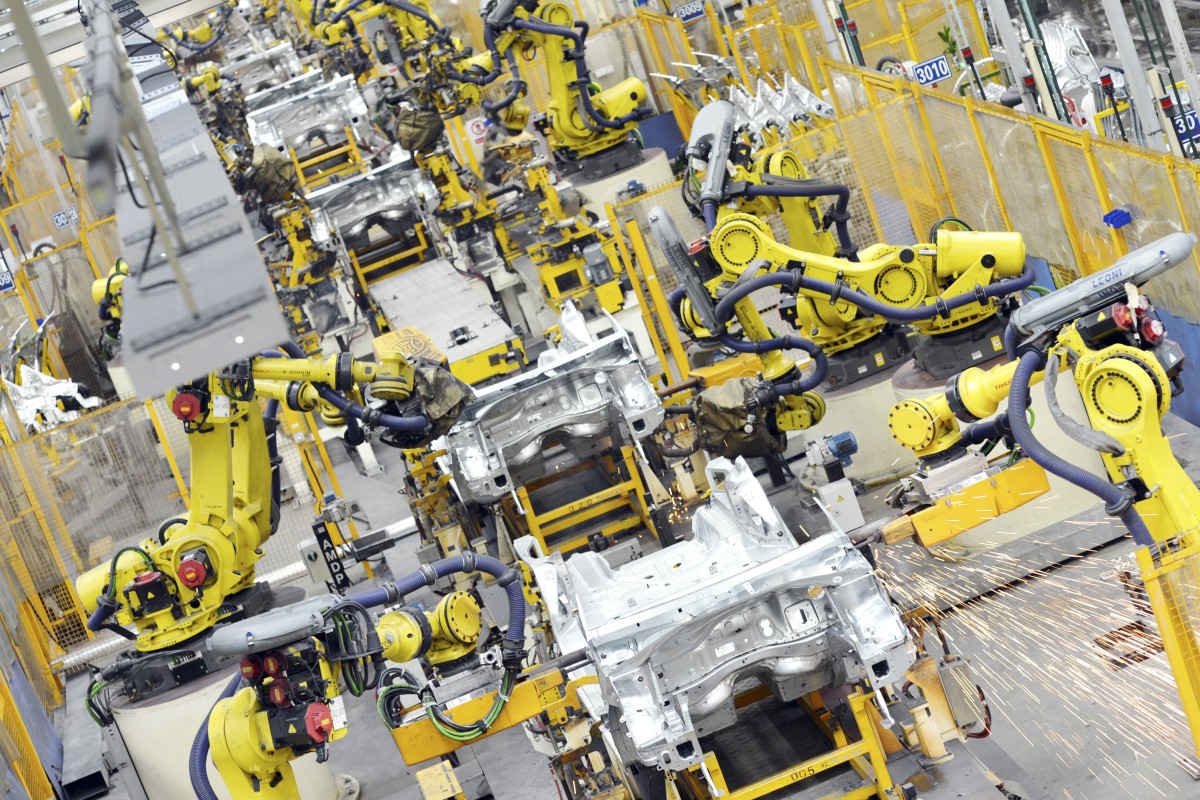
Prospects of China and the US securing a deal to end the trade war are dwindling. This is the fifth in a series of long reads examining the elements of any deal that Beijing would be willing to agree to, those that are considered achievable in the long run, as well as the red lines, on which Beijing is unlikely to ever budge. Part five focuses on the complex issue of state subsidies for China’s hi-tech industries.
If Beijing’s phasing out of references to “Made in China 2025”, the ambitious blueprint for the country’s industrial upgrade, was supposed to convince the United States that it had dropped the plan, then an outburst from US President Donald Trump last week showed that the move had clearly failed.
In an interview with CNBC, Trump railed against the plan, claiming that he had told his Chinese counterpart Xi Jinping that it was “insulting” to America, and that it was his own threat of retaliation that led to the brand being quietly dropped.
Washington has long complained about China’s state subsidies. Trump has often directed his fury at heavy industry, railing against cheap Chinese steel flooding US markets, even accusing Chinese trade practises of “raping” the American economy. However, it is arguably Beijing’s subsidies for hi-tech industries that the US fears most, as can be showed by its pursuit of China’s technology giants, Huawei and ZTE.
Both China and the US are aware that whoever dominates in technologies such as 5G, robotics, electric vehicles and cloud computing, could gain the upper hand in both trade and military terms in the decades ahead. Furthermore, the US government can look at industries such as electric vehicles and solar cells for precedents as to how China subsidises a developing technology to the point of dominance and only then winds down government support.
In the EV sector, China is beginning to reduce subsidies, but only at a stage when it is by far the global leader. In 2017, the country produced more electric vehicles than the rest of the world combined, 579,000, compared to 200,000 in the US and 98,000 in Japan.
China views these technologies as crucial to moving its manufacturing economy up the value chain and avoiding the dreaded middle income trap, where wages stagnate, igniting the potential for domestic unrest. In that regard, subsidising new industrial sectors – as with the state support continually pumped into job-rich industries like machinery and car manufacturing – helps keep discontent among the public muted.