Coronavirus: global trade braces for ‘tidal wave’ ahead, as shutdown batters supply chains
- A series of data points show where world trade is going, and the picture for air and sea freight is not a pretty one
- Supply and demand crises are coalescing on the high seas, as more countries shut their borders
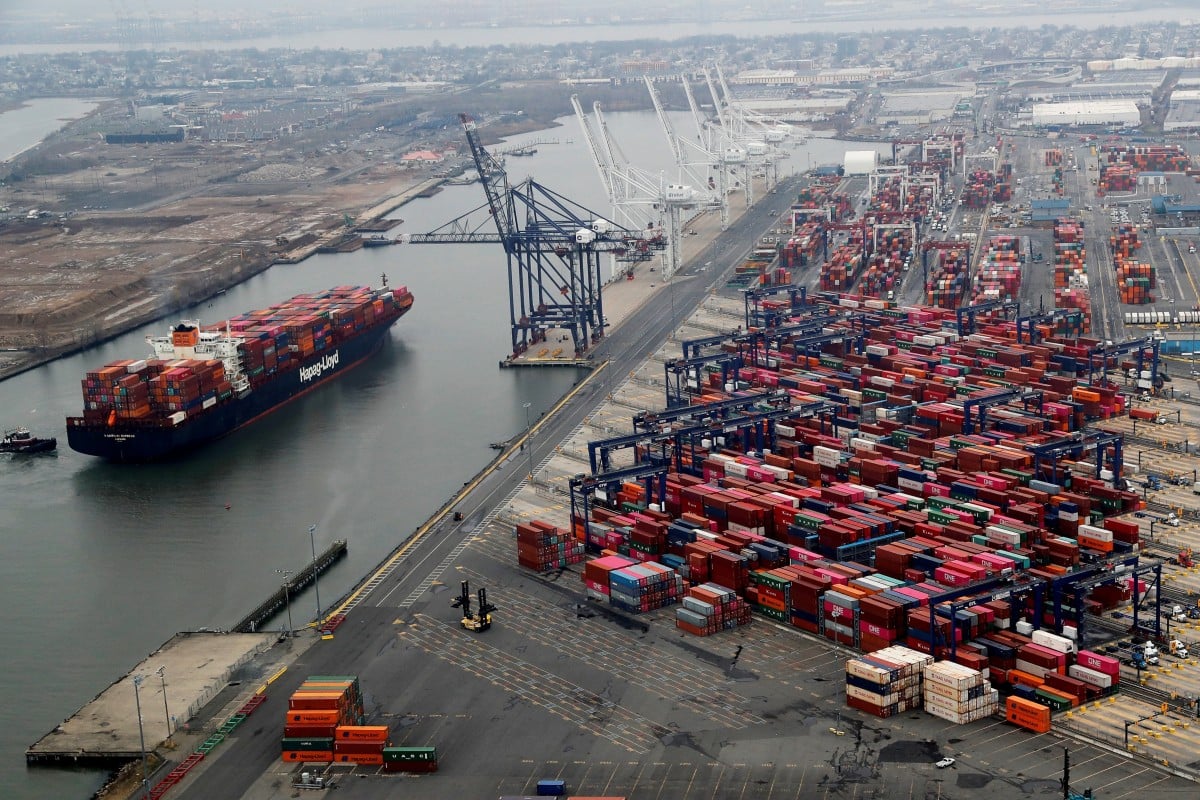
On Tuesday, the Port of Wuhan, a vital cog in China’s heavy industry supply chains, reopened for business after more than two months of being locked-down at the centre of China’s initial coronavirus outbreak.
In the same week, Ethiopia closed its land borders, Myanmar cancelled all commercial flights and South Africa restricted cargo movements to non-essential goods, joining the United States, Canada, Mexico and most of Europe in deploying draconian containment strategies aimed at stopping the virus’ spread.
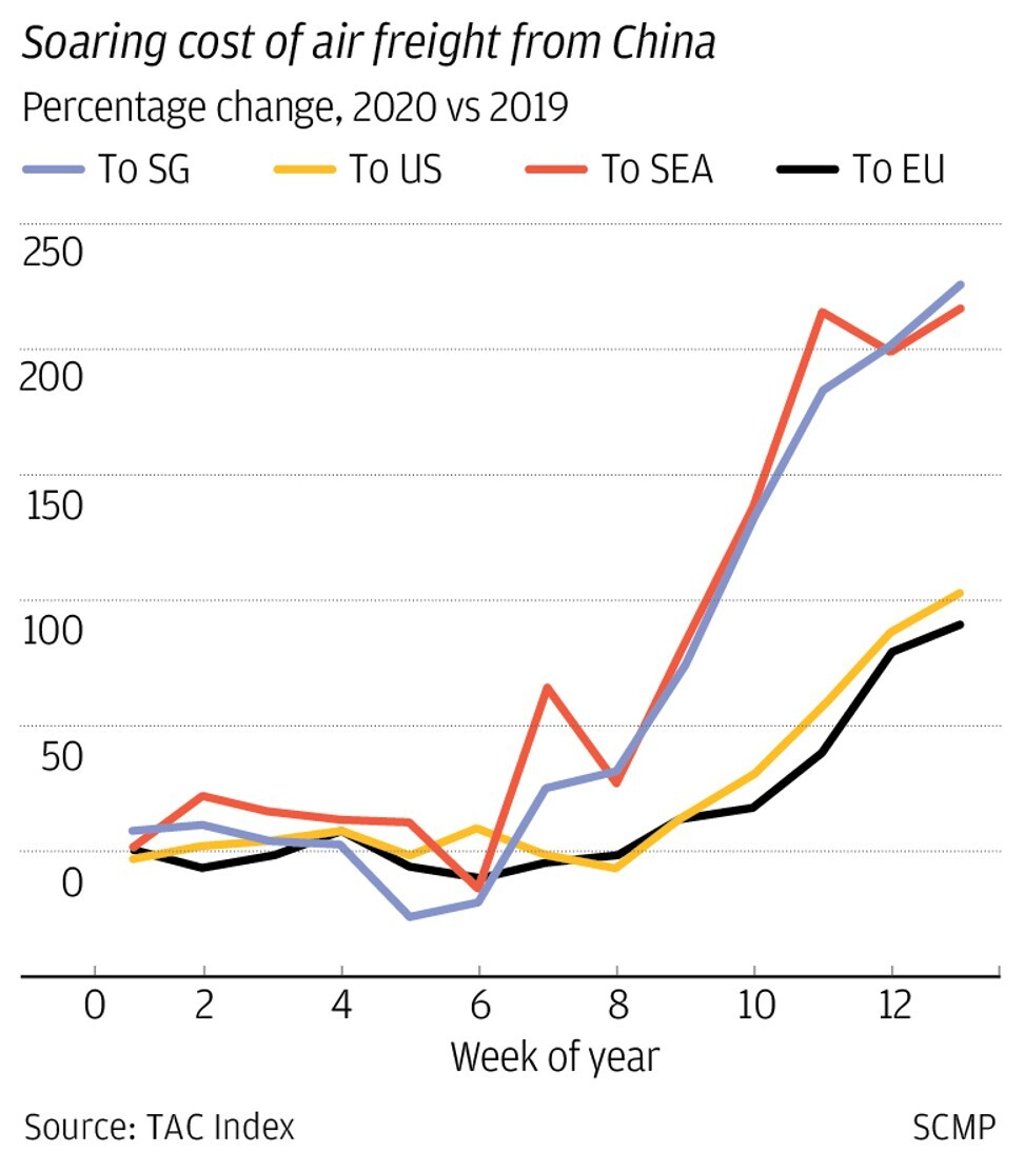
With barely any airlines flying out of China any more, it is more expensive to book cargo space and this will continue as the number of carriers dwindle and trade collapses along with it. But with much of the valuable space on these planes taken by vital medical equipment, there is vanishing room for anything else.
In another sign of the hit to come to air cargo – which transports more than US$6 trillion worth of goods per year, accounting for 35 per cent of global trade by value, according to the International Air Transport Association – Chinese airlines were told this week to maintain only one route to any specific country, with no more than one flight a week.
An estimated half of air freight – which is typically made up of high value or emergency products – travels in the belly of passenger jets. The dwindling number of flights presents another body blow to global trade, which fell by 1.2 per cent in January, according to the respected World Trade Monitor, conducted by the official statistics bureau of the Netherlands.
Gaps in the air freight network forced New England Patriots owner Robert Kraft to send his private jet to China this week to pick up a million masks and other medical equipment.