China lets yuan drop to five-month low on US tensions, uncertain global economic outlook
- Against the RMB index, which is made up of a weighted basket of currencies from China’s major trading partners, the yuan has declined for 16 straight trading sessions
- The Chinese currency has stabilised against the US dollar in May, but could fall again if Washington takes action over the Hong Kong national security law
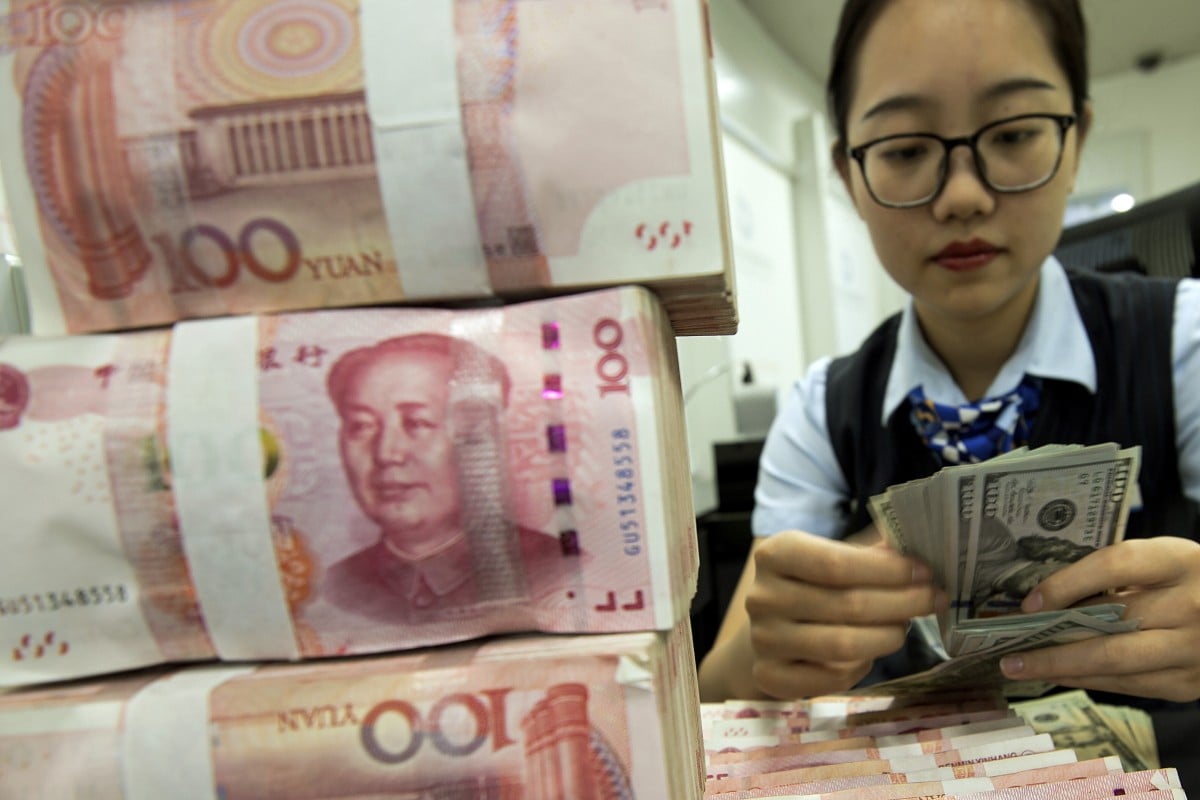
China is tolerating a gradual weakening of the yuan’s value against a basket of major currencies because of a worsening political confrontation with the United States and a challenging economic outlook, analysts said.
The yuan fell to 7.1778 against the US dollar at the end of May, near the rate it was trading at in September, which was the weakest level in 11 years, before subsequently rebounding. As of Tuesday, it had strengthened to trade at 7.0750 against the US dollar.
But against the RMB index, which is made up of a weighted basket of currencies from China’s major trading partners, the yuan has declined for 16 straight trading sessions to 91.69, its lowest level in five months, down from this year’s peak of 95.7.
A weaker yuan against a particular currency makes Chinese exports more affordable for foreign buyers in that country, which helps support growth at home.
“In the short term, it may lead to yuan depreciation pressure from the perspective of risk appetite and capital flows,” Huatai Securities said.