US climate bill still falls short of China’s clean energy investment, says Beijing envoy
- Xie Zhenhua, China’s special envoy for climate change, says developed nations have failed to contribute US$100 billion per year to combat climate change
- Xie’s US counterpart, John Kerry, this week urged President Xi Jinping to resume climate change discussions that were suspended by Beijing in August
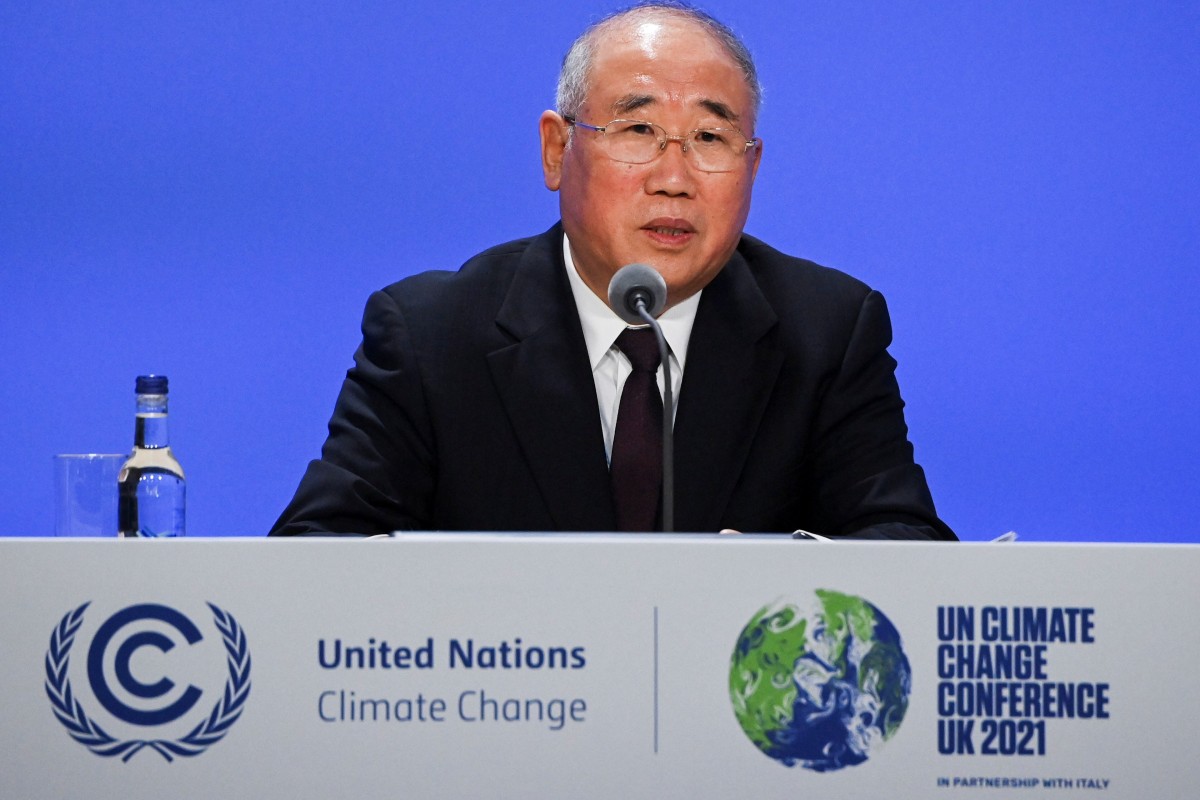
The US will still trail China in clean energy investment even after passing a landmark climate bill last month, according to Beijing’s special envoy, adding developed nations are falling short of their climate finance commitments.
By 2021, China had invested US$380 billion in clean energy – “ranking first in the world” – more than the US$370 billion allocated for climate spending in the US Inflation Reduction Act, which President Joe Biden recently signed into law, said Xie Zhenhua, Beijing’s special envoy for climate change.
China’s installed non-fossil fuel energy capacity reached 1.12 billion kilowatts by the end of last year, on par with total US installed energy capacity, which was about 1. 1 billion kW, Xie said on Thursday.
There has been a lack of political mutual trust on the issue of funds
Xie’s US counterpart, John Kerry, urged Chinese President Xi Jinping to resume suspended discussions on Tuesday in an interview with the Financial Times.
The former US Secretary of State also said that he was hopeful the countries could “get back together” ahead of the United Nations’ Climate Change Conference in Egypt in November.
In 2009, wealthy countries pledged to contribute US$100 billion per year to combat climate change by 2020. But Xie pointed out they had not met the commitment, with the current level around US$80 billion.
“There has been a lack of political mutual trust on the issue of funds,” Xie said while addressing the Climate Economy Summit at the China International Fair for Trade in Services.