Vietnam company finding a silver lining to US-China trade war, due to Asian supply chain shift
- Vinasolar, owned by Shanghai-based Yize New Energy, started production in Vietnam in 2014, after the United States and EU put tariffs on solar panels
- Now it is seeing a huge surge in orders, as other Chinese companies look to avoid US tariffs by exporting materials for assembly in Vietnam, then onto America
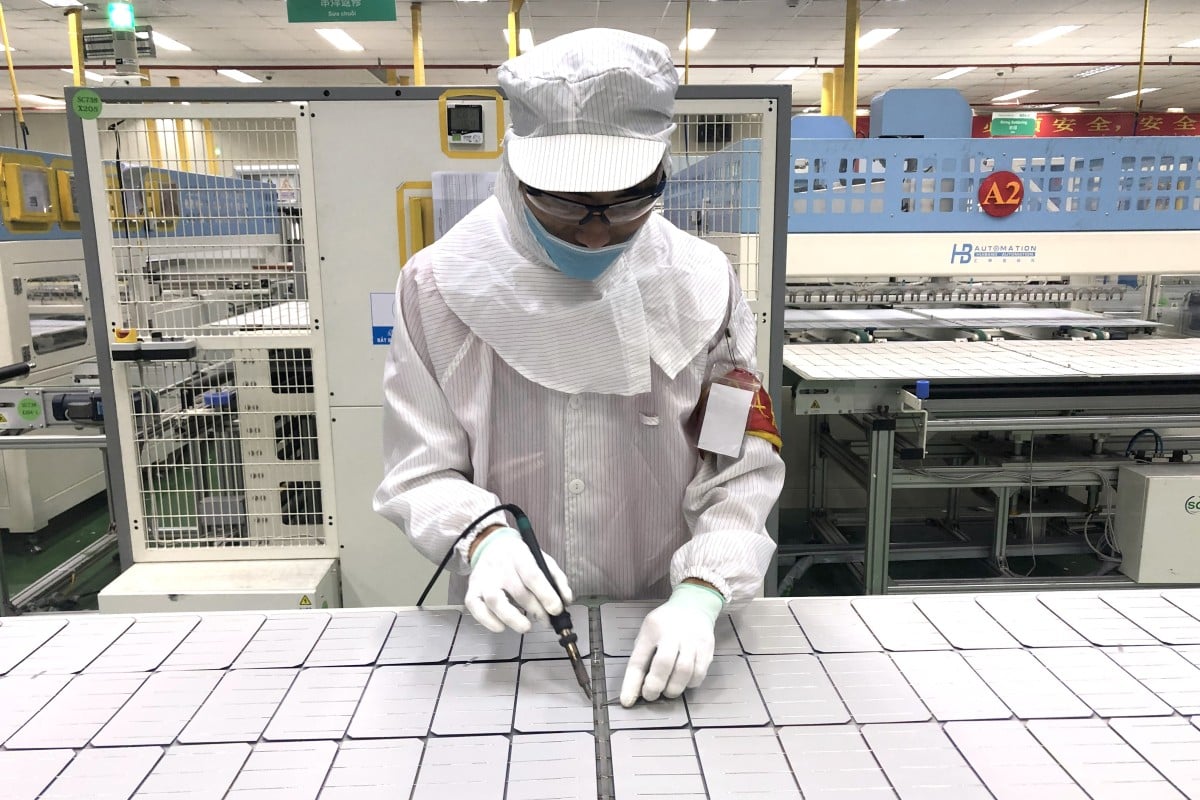
A Chinese company is discovering a silver lining to US President Donald Trump’s trade tariffs, which are redrawing the Asian supply chain.
“We are planning to expand our production line this year as we are receiving more orders from Chinese companies,” said Zhang Kai, vice-general manager at Vinasolar, in an interview in his office in Vietnam’s Bac Giang Province. Zhang said the company also has higher orders from other countries.
The solar tariff battle started in 2012, when the US imposed tariffs of up to nearly 250 per cent on solar panel imports after an investigation found that the Chinese government was subsidising Chinese panels that were flooding the US market. China denied that it had subsidised solar panels for export.
The following year, the European Union announced that it would impose a tariff of 12 per cent on the import of solar panels, cells and wafers from China. The EU ended restrictions on the sale of solar panels from China in September last year in a move that EU producers said “would lead to a flood of cheap imports”.
But the US did not back down. In 2014, Washington announced a second round of anti-dumping duties ranging from 27 per cent to 78 per cent on imports of most solar panels made in China. It also added anti-subsidy duties ranging from 28 per cent to 50 per cent on Chinese solar panels to offset the financial support the Chinese government gave to manufacturers.
Then, in February 2018, the US government implemented “global safeguard tariffs” – placing a 30 per cent tariff on all solar panel imports, except for those from Canada, in addition to the existing duties, after Trump signed a Section 201 action, which would last for at least four years and could be extended to eight years.