How traditional Chinese medicine found its way onto fine-dining and bar menus in Hong Kong
At Man Ho Chinese Restaurant, Table by Sandy Keung and Clan & Co, chefs and bartenders are leaning into ancient wisdom and giving TCM a tasty makeover

The Mandarin term for this is guochao, loosely meaning “national wave” and describing the rebranding of Chinese heritage as something desirable rather than dowdy. It began with Li-Ning starring on the runway at New York Fashion Week in 2018, followed a year later by Florasis’ engraved lipstick cases – the designs of which were inspired by ancient Chinese relief-engraving craftsmanship.
Now, the trend has migrated to restaurant and bar menus – guochao in digestible form – steeped in a promise of wellness and cultural pride. The challenge, however, is how to translate a tradition defined by bitter medicine into something people actually crave.
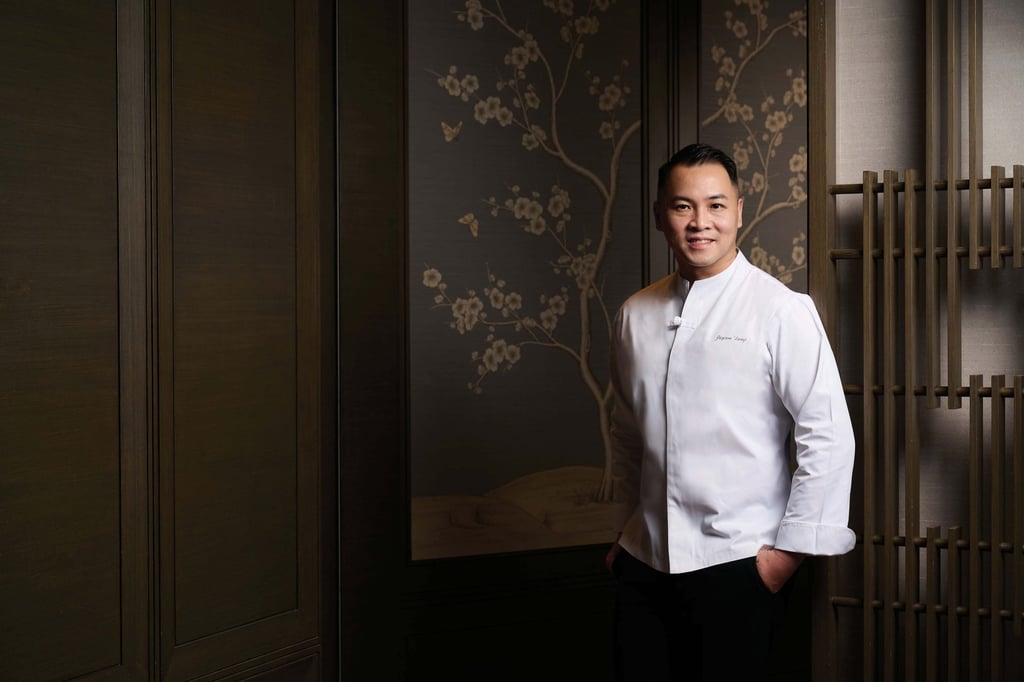
For many younger diners, the first barrier to TCM is its sheer intellectual density. It can feel like an arcane maze of unseen bodily energies and ancient texts that have accumulated over the centuries. Jayson Tang, executive Chinese chef of Man Ho Chinese Restaurant, solves this by translating TCM’s abstract philosophy into a highly visual, intuitive language.
It helps that Tang grew up with TCM as a practical reality. “When I was a child, I suffered from frequent skin irritation,” he says. “My uncle would take me to see an old TCM practitioner. The herbal remedies worked.” Elsewhere, his mother brewed soups according to the calendar: “This one to clear heat, that one to strengthen the lungs,” he recalls.
At Man Ho, Tang dismantles the esoteric nature of TCM using his Five Elements Menu, which draws inspiration from the 2,000-year-old Huangdi Neijing, one of the foundational texts of TCM that gained a following among Taoist practitioners. The text maps colours onto organs and elements: white is for the lungs and metal; green for the liver and wood; black for the kidneys and water; red for the heart and fire; yellow for the spleen and earth.