Stealthy seahorses sneak up on prey
Calm water above the predator's snout lulls prey into false sense of security
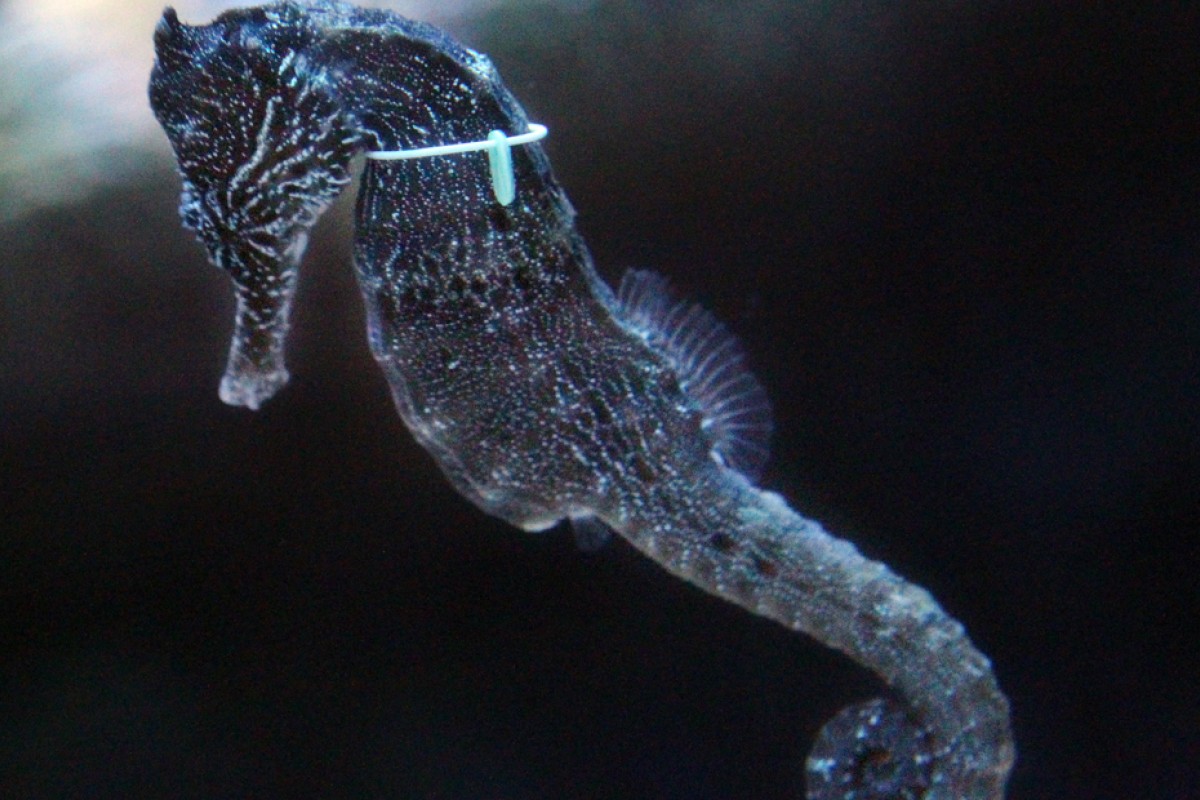
Those cute seahorses are actually stealthily effective ocean predators. Make that one of the most effective predators in the animal kingdom.
The dwarf sea horse is less than 2.5cm long, and with its S-shaped body and small dorsal fin, it's going nowhere fast. But oddly enough, this unusual body shape and lack of speed make the seahorse a menacing hunter.
Unlike fish with protruding jaws, the seahorse has a long, thin snout that it rotates towards prey in a swift snatching motion called pivot feeding. This millisecond manoeuvre creates suction that pulls in the seahorse's prey, but it works only at extremely close range.
"We knew that these sea-horses were feeding successfully by doing this short-range swinging motion," says Brad Gemmell of the University of Texas at Austin's Marine Science Institute. "But they must first overwhelm the ability of the prey to escape. Our question was: how do they get so close without alerting their prey?"
This is no mean feat. Copepods, the tiny crustaceans that dwarf seahorses eat, are highly sensitive to changes in the water around them. They rely on small, sensitive hairs to detect motion, and once they sense danger they have one of the fastest escape responses of any organism on the planet: they are able to flee at 500 body lengths per second. By comparison, a cheetah can manage only 30 body lengths per second.
Gemmell and a team of researchers used high-speed cameras to measure the movements of seahorses and the velocity of the water around them as they approached their prey. They found that the water just above the snout of the seahorse was significantly less turbulent than above or to the side of its body.