Why public book sharing hasn’t taken off in Hong Kong, and what that says about city’s street life and appetite for reading
Book crossing, or leaving books in public places for people to read, is popular in Singapore, Taiwan and elsewhere, but in Hong Kong bookcases placed on streets have been removed by government workers or stolen; a few do thrive, though

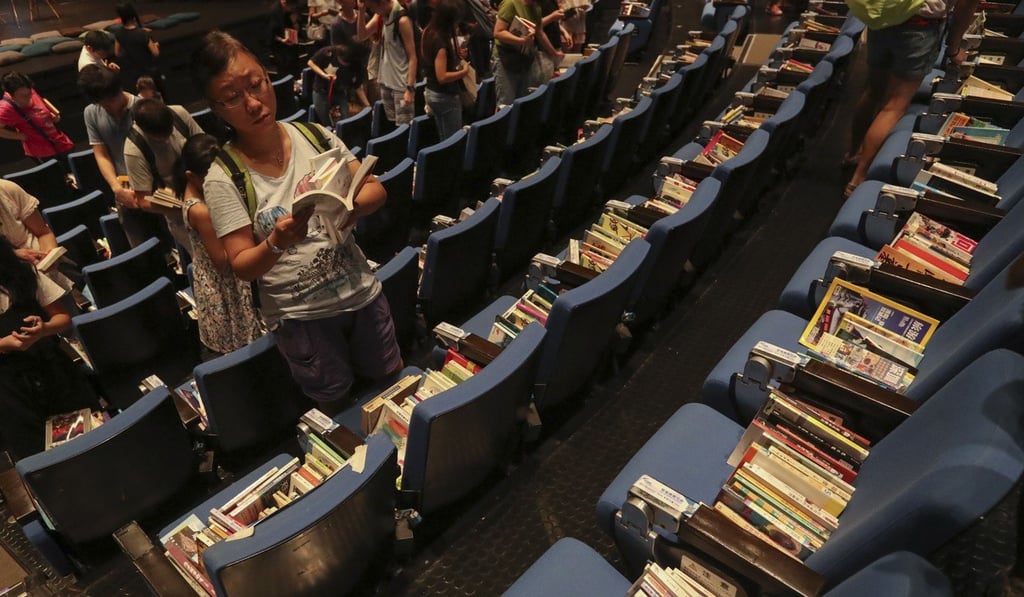
Bookworms drift along seat rows, slowly scanning book titles and occasionally picking one up to take home. About 2,300 people attended the seventh annual Book Crossing Festival last month at Youth Square in Chai Wan, where more than 8,000 books were available for exchange over two days.
Book crossing, or book exchange, means leaving a book in a public place – not at an organised event – to be picked up and read by others, who then do likewise. It’s not as established in Hong Kong as it is across Europe and in other Asian locations such as Singapore and Taiwan, but it has been slowly taking root in the city.
In April this year, officers from the Food and Environmental Hygiene Department removed a bookcase from the pavement in Centre Street in Sai Ying Pun. It had been collectively maintained by residents as part of a citizen-led initiative to promote community building and freecycling.
Make reading a joy not a chore, Hong Kong parents and teachers urged
Neighbourhood resident Tsui Ho-yee recalls how, two years ago, a group of students organised the initiative as a social experiment after seeking the opinion of residents. The bookcase was warmly received and it remained on the street after the experiment ended.