Advertisement
Huawei
Lifestyle

Review | Huawei Mate 10 first impressions: ‘intelligent’ phone’s NPU chip can run AI and an internet-free digital assistant

Huawei says its latest chip set makes the Mate 10 faster, more efficient and able to recognise subjects to take much better photos. It is also waterproof and looks just as good as Samsung and Apple’s phones

Reading Time:3 minutes
Why you can trust SCMP
Huawei’s Mate 10 Pro handset. Both it and the Huawei Mate 10 are waterproof.
Ben Sin

The smartphone era is over – that was what Richard Yu, Huawei’s head of consumer business, told me in Berlin in August. He was, of course, building hype for the Mate 10 (and Mate 10 Pro), which the Chinese tech giant is calling the “intelligent” phone.

Announced on Monday in Munich, both variants of the Mate 10, at first glance, follow the 2017 mobile handbook closely.
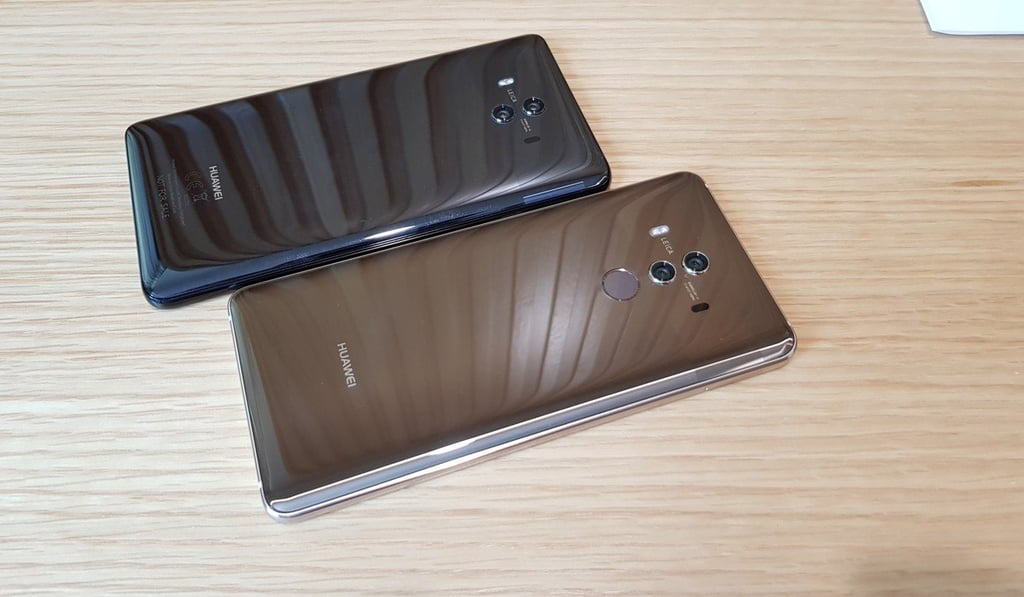
The Mate 10 Pro has a fingerprint sensor on the back while the standard edition has its scanner on the front. Photo: Ben Sin
The bezels have been reduced considerably from last year’s Mate 9; both devices have glass backs; the Pro has that elongated 18:9 aspect ratio. The dual Leica camera set-up from previous Huawei flagships has returned, and the aperture matches LG’s industry leading f/1.6 aperture.
Advertisement

The Mate 10’s Kirin 970 chip set, which the company developed in house, is the world’s first mobile SoC (systems on a chip) to have a dedicated NPU (neural processing unit).
Advertisement
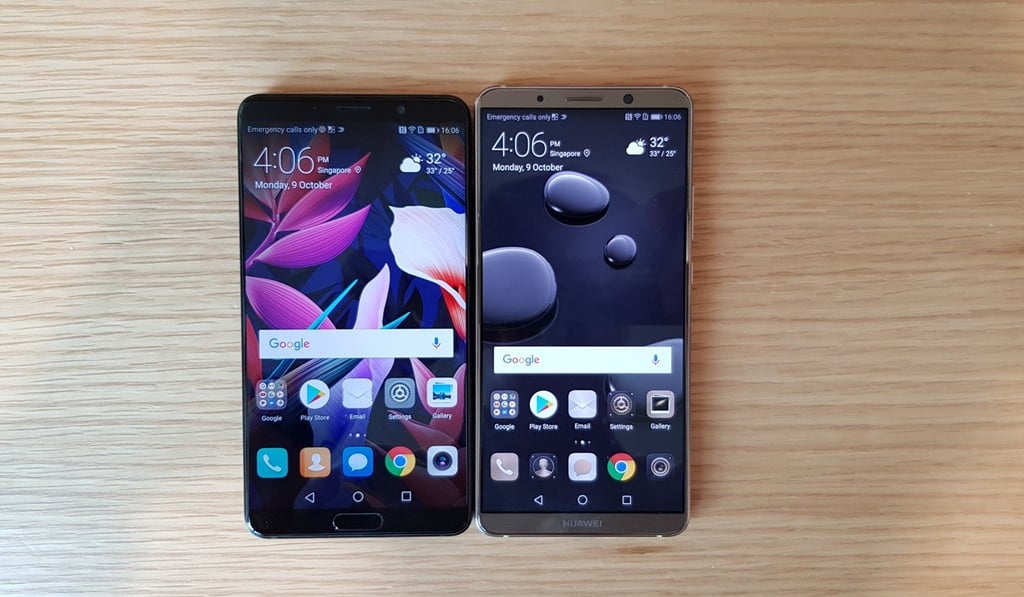
Huawei Mate 10 (left) and Mate 10 Pro. Photo: Ben Sin
For those who may be unfamiliar, an NPU is essentially like a CPU (central processing unit) that has for decades been used as the “brains” of a computer, but it’s much more powerful and has the ability to adapt and grow. Yes – NPU is built for running artificial intelligence.

“In traditional CPUs and GPUs [graphic processing unit], they process information step by step. If step A happens, then B happens … they are reactive chips,” explains Justin Zhang, Huawei’s smartphone marketing senior director.

Advertisement
Select Voice
Choose your listening speed
Get through articles 2x faster
1.25x
250 WPM
Slow
Average
Fast
1.25x