Retired landmine detection dogs find a home at Cambodian charity after working in ‘some of the most horrific parts of the world’
In the first of a three-part series on man’s best friend to mark the Year of the Dog, we talk to Home of Heroes founder Yulia Khouri on her retirement home for de-mining dogs in a country still littered with deadly unexploded ordnance

The brown and black Belgian Malinois jumps up at her owner, panting excitedly, before obediently following the order to sit. “This is Muriel,” says Yulia Khouri, founder of the Animal Mama Veterinary Hospital and Pet Wellness Centre in the Cambodian capital Phnom Penh, pointing to the athletic 12-year-old dog.
Khouri, a Canadian expat and long-time animal rights advocate, adopted Muriel in early 2016 when the dog retired after almost a decade spent helping to clear minefields in former war zones around the world.
Why Hong Kong dog shelters are struggling to survive
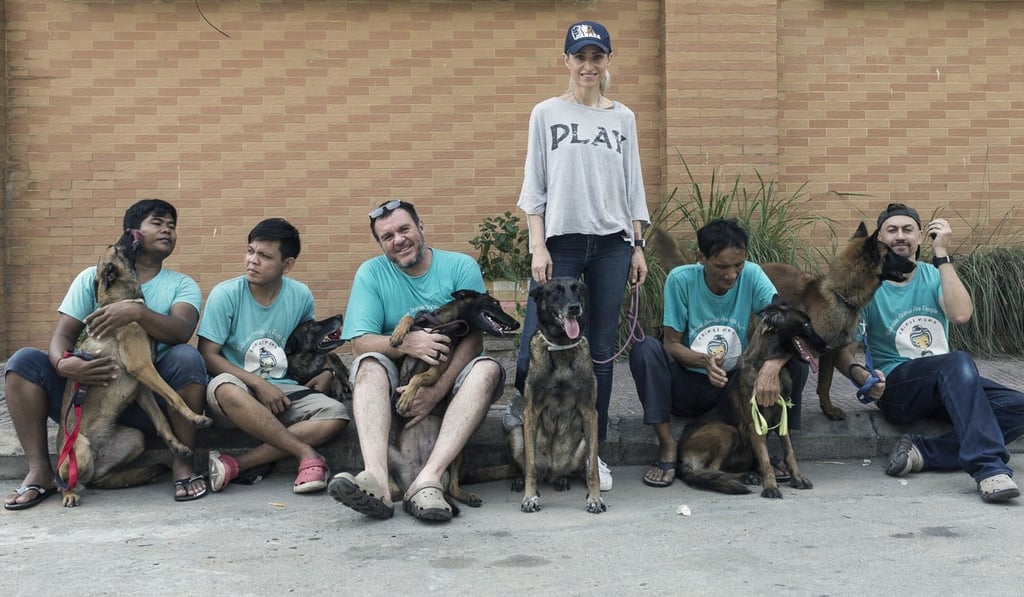
Muriel ended her working life with a stint in Cambodia. She was one of the lucky ones: most retired de-mining dogs are euthanised. Touched by their plight, Khouri established Home of Heroes last year, the world’s first retirement home for de-mining dogs and Belgian Malinois pups that are not deemed up to the task.
The wounds of decades of conflict continue to scar Cambodia, one of the most heavily mined countries in the world. Civil war, US bombing campaigns and the brutal Khmer Rouge reign from 1975 to 1979 resulted in millions of landmines being planted and bombs dropped. The country was left littered with deadly unexploded ordnance – up to 10 million, according to the Cambodian Mine Action Centre (CMAC), a government organisation.
Since the mid-1990s, large-scale operations have been undertaken across the country by the CMAC and other local and international organisations to rid Cambodia of its deadly explosives, but there is still much work to do. The Cambodia Mine/ERW (Explosive Remnants of War) Victim Information System has recorded a total of 64,720 human casualties since 1979. Meanwhile, a report released in January by the Cambodian Mine Action and Victim Assistance Authority revealed there were 58 casualties across the country in 2017 – a 30 per cent drop in the number of victims the previous year.