VideoThe day I drove a Porsche using AI and a Huawei smartphone, dodging obstacles in the FC Barcelona car park
With just a telephoto-lens camera attached to the top of a Porsche Panamera to feed road footage to a Huawei Mate 10 Pro, the phone’s neural processing unit (NPU) was able to identify objects and react to them accordingly

Although Chinese mobile-phone giant Huawei unveiled flagship smartphone models in its P series at the Mobile World Congress (MWC) in both 2016 and 2017, it decided to keep its latest handset, the P20, out of this year’s show in Barcelona.
It’s not because the device – believed to be a major upgrade on the previous model with a radical three-camera set-up – wasn’t ready. It’s because the Shenzhen-based tech company already had enough to flaunt at the world’s largest mobile phone trade show, including another of its flagship phones, the Mate 10 Pro, which was released in October last year.
Huawei Mate 10 review: NPU adds intriguing AI possibilities to an already refined and powerful phone
A source within Huawei says a big reason for the P20’s delayed unveiling is to give the Mate 10 Pro more time to shine. That definitely seemed to be the case at MWC, where the handset was the centre of a headline-grabbing showcase: it drove a Porsche.
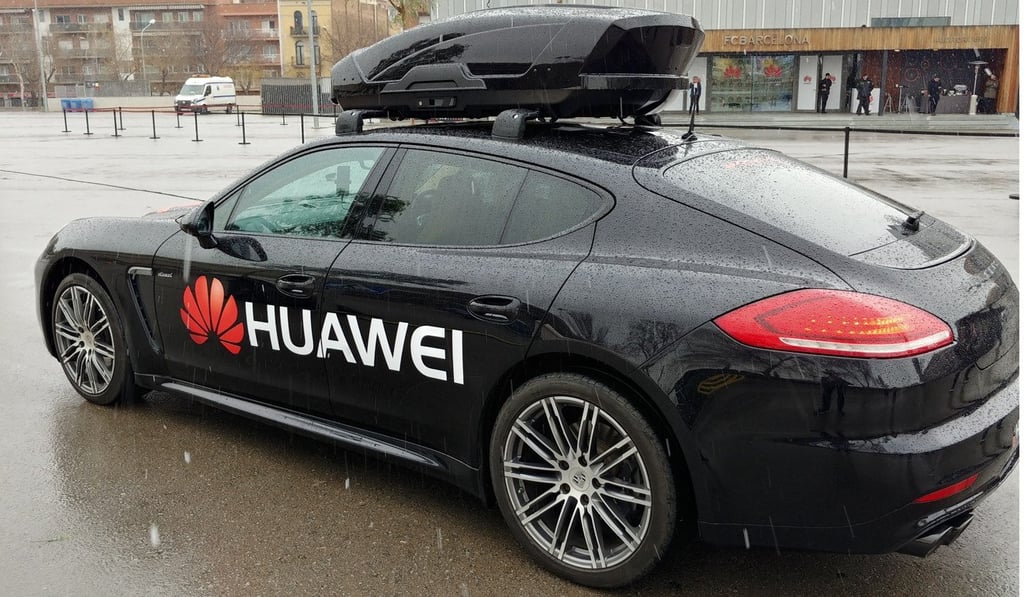
I got the chance to ride in the AI-driven car in the car park at Camp Nou, the stadium of Football Club Barcelona. It was a short distance, at a relatively slow speed of 48 kilometres per hour (30 miles per hour), but the experience was still impressive.
With just a telephoto camera attached to the top of a Porsche Panamera that fed the Mate 10 Pro road footage, the phone’s neural processing unit (NPU) was able to identify three different objects – life-size cardboard cut-outs of a cyclist, a dog and a football – and react to them accordingly based on preset commands given by me, such as swerve right or stop.