Holi explained: India’s ‘festival of colours’ is all about fun, freedom and forgiveness
- Entire neighbourhoods and towns come together on Holi to splash and smear each other with coloured powder, paint and water, all in good humour
- The tradition is believed to have come from a mischievous boyhood prank that the god Krishna played upon Radha, his beloved

“Witness the beauty of the great cupid festival which excites curiosity as the townsfolk are dancing at the touch of brownish water thrown from squirt guns. They are seized by pretty women while all along the roads the air is filled with singing and drum-beating. Everything is coloured yellowish red and rendered dusty by the heaps of scented powder blown all over.”
This poetic dialogue, taken from the seventh-century Sanskrit play Ratnavali, describes the celebration of Holi, the Hindu festival of colours. It could very well be describing the scene of the modern-day festival being celebrated in many parts of India, Nepal and other parts of the world.
Holi is an exuberant festival where people splash and smear each other with coloured powder, paint and water, all in good-spirited humour. Entire neighbourhoods and even towns come together on Holi – which this year falls on March 21 – as the frolic and fight with colours is played out in community centres and parks, and spills out onto open streets.
Groups of revellers go around town shouting, “Holi hai bhai Holi hai, bura na mano, Holi hai” (It’s Holi, don’t be offended, it’s Holi) – the universal evocation associated with the festival, which is a warning as well as a plea for forgiveness. It is a license to indulge in pranks that one would not dare dream of committing on any other day, such as throwing water-filled balloons at strangers from rooftops, or creeping up on parents and older relatives and drenching them with coloured water. Anyone and everyone, friend or stranger, is fair game at Holi.
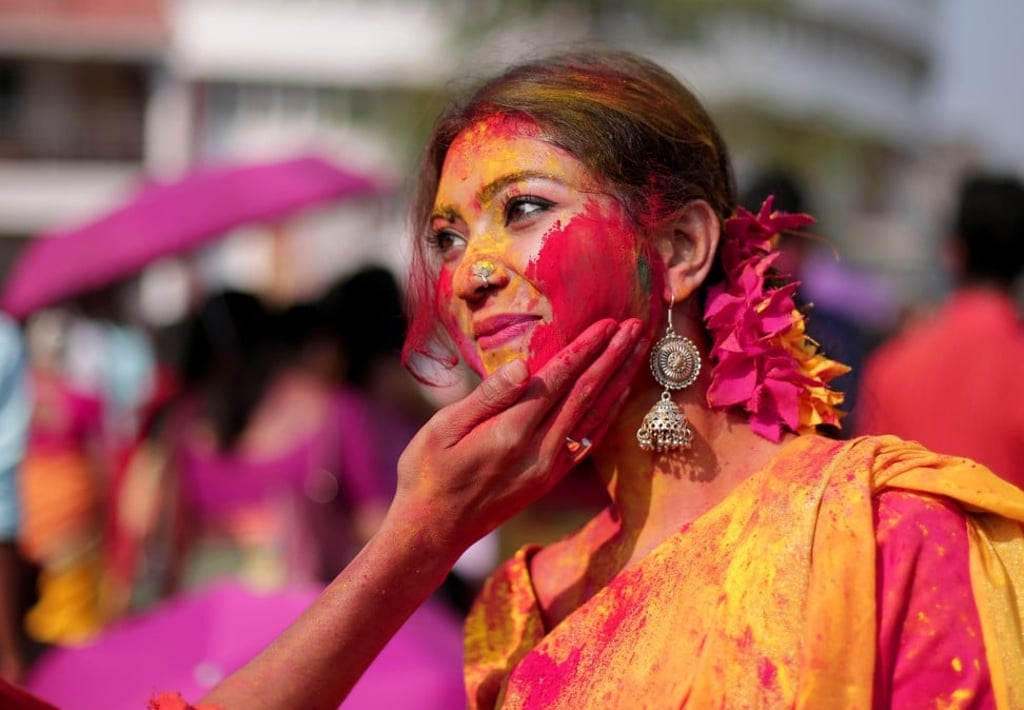
All rules of propriety and social distinctions appear to be suspended during Holi. It is as if the joyful anonymity of the paint-smeared faces and attire allow for societal segregations to be forgotten. Girls mingle freely with boys, the poor hang out with the rich, and even caste differences are forgotten.