The dancer breaking racial and gender stereotypes in India: a mixed-race man in an Indian woman’s world
- He may look more Chinese, but Charles Ma doesn’t let tradition stop him from dancing Bharatanatyam, which is usually performed by Indian women
- When he started he was told his eyes were too small, and later a teacher asked him to wear pink lipstick and earrings for a performance

Chinki is an ethnic slur used in India, mostly to refer to people of Chinese origin. For those who use it, the Chinese are chinkis, but so are the Nepalis, and even the people of northeastern Indian states.
Dance teacher and performer Charles Ma ignores such racial insults. “If someone called me ‘chinki’ when I was growing up, I would say ‘abbey ja na’ [‘go take a hike’],” he says. “I couldn’t care less.”
Neither did he let it put him off learning Bharatanatyam, a form of Indian classical dance traditionally featuring Indian women with big painted eyes.
“You have such small chinki eyes,” Ma says someone told him 15 years ago when he was learning the dance form. “Bharatanatyam dancers have big eyes. Why not learn something else?”
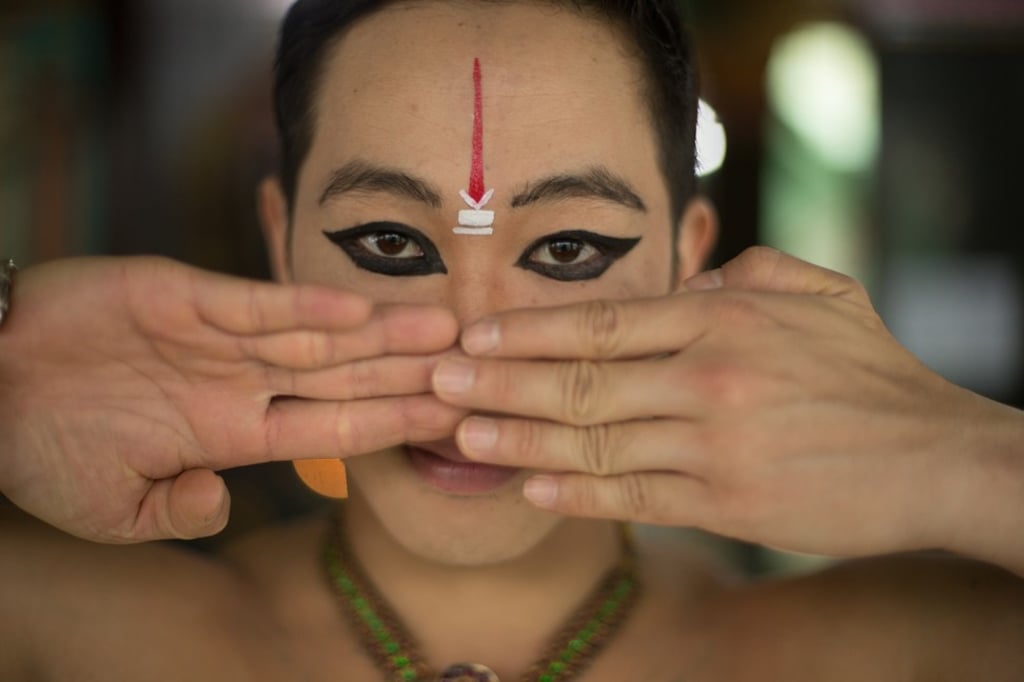
In Bharatanatyam, the nayika (heroine) uses her highly expressive eyes and hand gestures to convey a range of emotions – the exultation of meeting a lover, for instance, or the pain of being separated.
Most people would imagine it performed by an Indian woman with eyes painted with kohl – an ancient eye cosmetic – and long dark hair, wearing a rich silk sari and ornate gold jewellery. So when a young man with an apparently Chinese face went knocking on the doors of Bharatanatyam teachers, quite a few pointed out he was not the right fit.