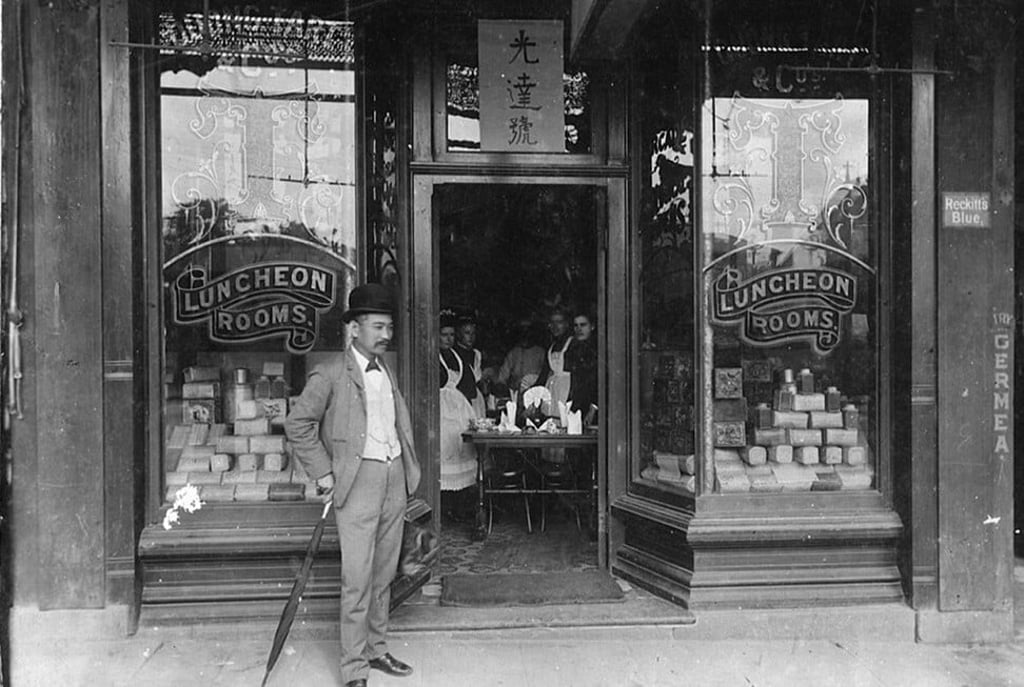
Quong Tart, the Chinese man who played a key role in Australia’s fight for women’s suffrage, and how he wasn’t just a successful entrepreneur
- Quong Tart came to Australia in 1859 as an enterprising nine-year-old, where he later established a tea export business and set up elegant tea rooms
- At a time when there were few places women could mingle with ease, the tea rooms formed important venues for women’s early discussions on getting the vote

A group of wealthy and respectable middle-class Sydney women gathered in a tea room in the 1890s, where they “sat by favour of that Chinese gentleman” Quong Tart while considering how best to fight for the right to vote, a movement that was gaining ground in England.
Writing in The Sydney Morning Herald decades later, Maybanke Anderson, one of the city’s prominent women’s activists, remembered the moment in 1891 when she and a comrade, Rose Scott, “first spoke a few words on the subject of women’s suffrage” in one of Quong Tart’s tea rooms.
By the 1890s, women around the world had been fighting for the vote for years, and they would keep up the struggle for many more, despite being beaten, arrested, sent to prison and force-fed when they went on hunger strikes.
Australia, after New Zealand, was one of the first nations to allow women to go to the ballot box, first in individual states and federally in 1902.
Quong Tart’s elegantly appointed tea rooms on Sydney’s King Street, and later in the still-standing Queen Victoria Building and elsewhere in the city, were important venues for Australian women’s early discussions on the battle for universal suffrage.