
Advertisement

Language Matters | Why language loss in indigenous communities hurts biodiversity conservation

Ecosystem loss and language erosion often occur in tandem. Thankfully, Cop30 marked an unprecedented effort to elevate indigenous voices

Reading Time:3 minutes
Why you can trust SCMP
1
Activists take part in a climate protest during the Cop30 UN climate summit in Belem, Brazil, on November 15 2025. Photo: AP

Cop30, the 30th meeting of the Conference of the Parties (Cop) to the United Nations Framework Convention on Climate Change (UNFCCC), the 1992 landmark international treaty and parent treaty to the 2015 Paris Agreement, began on November 10 and was scheduled to end on November 21.

Hosted in Belem, Brazil, Cop30 was the “Forest Cop”, not only for its Amazon rainforest venue, but because a focus of the UN Climate Change Conference is forest and biodiversity protection. Central to this endeavour has been the significant inclusion of indigenous peoples in dialogue.

Indigenous peoples, numbering some 476 million worldwide, comprise just 6 per cent of the global population – but almost 40 per cent of the planet’s intact forests are located in indigenous territories. Indigenous peoples are thus stewards of hundreds of millions of hectares of land, safeguarding much of the world’s biodiversity.

Advertisement

Regions of great endemic biodiversity that contain at least 1,500 species of vascular plants found nowhere else on Earth, but which have also lost at least 70 per cent of their primary native vegetation – usually because of human activities and influences – are known as “biodiversity hotspots”.
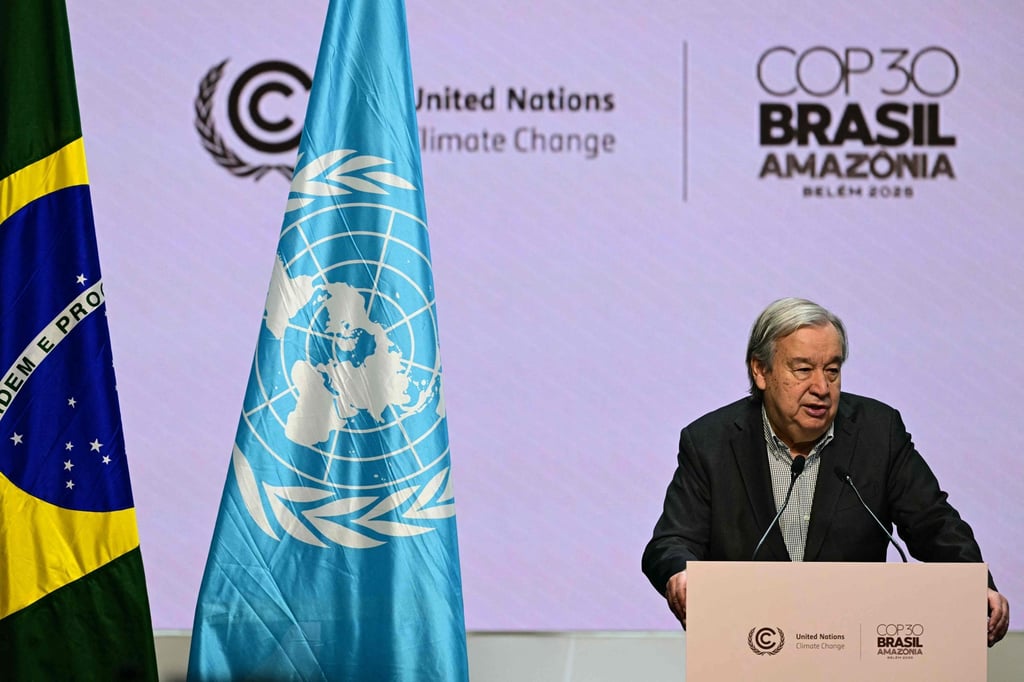
UN Secretary General Antonio Guterres speaks during a press conference at the Cop30 United Nations Climate Change Conference in Belem, Brazil on November 20, 2025. Photo: AFP
Currently, 36 biodiversity hotspots are identified globally, which, while comprising only about 2.5 per cent of Earth’s land surface, are home to more than half of the world’s plants and 43 per cent of land vertebrates.
Advertisement
Advertisement
Select Voice
Choose your listening speed
Get through articles 2x faster
1.25x
250 WPM
Slow
Average
Fast
1.25x