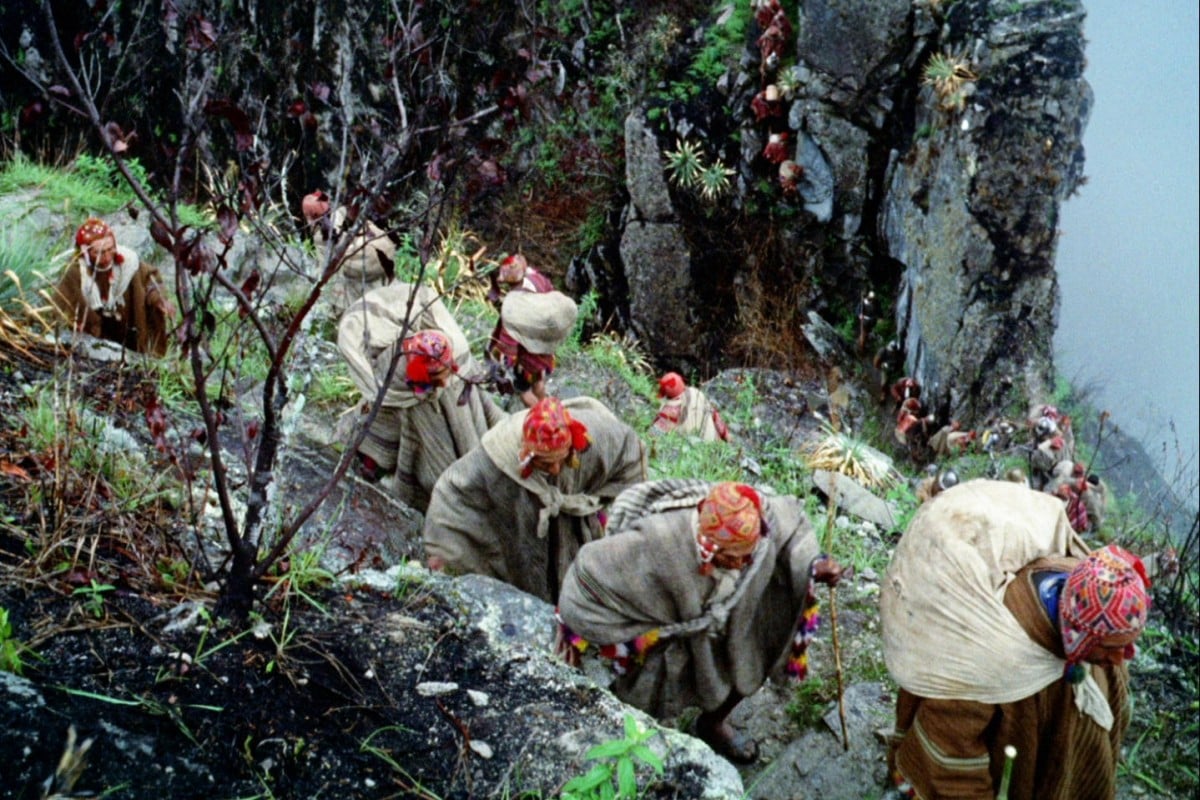
Aguirre, the Wrath of God
Klaus Kinski, Ruy Guerra, Helena Rojo
Director: Werner Herzog

Lesser recognised, but no less powerful, is Aguirre, the Wrath of God, German filmmaker Werner Herzog's breakthrough masterpiece of greed gone wrong. The film follows 16th century conquistador Don Lope de Aguirre (Klaus Kinski), a mutinous and often mad Pizarro soldier sent deep into the Peruvian rainforest on an ill-fated expedition to discover El Dorado's mythical city of gold.
Aguirre was a cult classic before the term was ever coined. Lean and low-budget, it was filmed in a TV-like 1.33 aspect ratio with cheap costumes and effects. In lesser hands, that would have detracted from its spectacle. But from its sweeping opening shots, a tiny line of soldiers contrasted against a fog-covered mountain, Herzog establishes Aguirre as a film concerned with man's feeble attempts to conquer nature.
The conquistadors spend much of the film lost in the wilderness and bickering about promises of wealth and the need for power - none more so than Aguirre, who considers himself the embodiment of God's wrath. This was the first of five collaborations between Herzog and his long-standing muse/adversary Kinski, and the bug-eyed actor's performance is essential to its raw energy, alternating between quietly ascetic and intensely ferocious.
But the true star is the South American location, the ideal complement to Herzog's austere view of humanity's lesser qualities. The setting evokes a raw mood that evolves as the film progresses from dream to nightmare: shot subtly at first as Aguirre's visions of continental conquest seep into his mind, only in the final act does the chaos settle in.