How China’s leading contemporary artist went from showing in letterboxes to international galleries
When he was trying to break into the industry, Huang Yan sent 10,000 letters containing paintings and poems direct to critics and artists in China

Before Chinese artist Huang Yan hit it big, his works were more often seen in letterboxes than in art galleries.
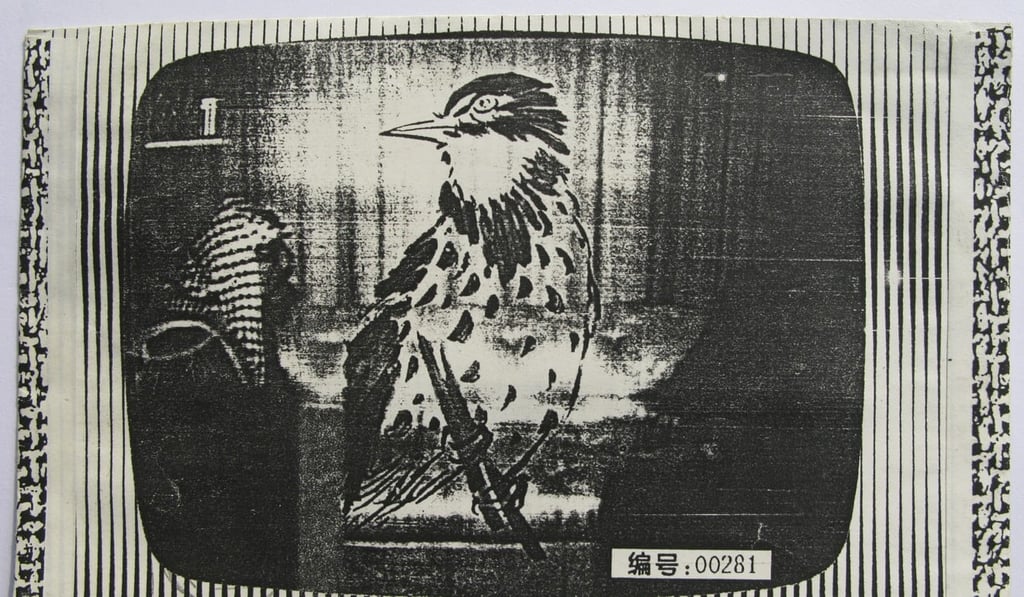
“I called them ‘eight-cent art’, because a stamp cost about 0.08 yuan those days. I probably sent at least 10,000 letters and postcards to critics and artists,” Huang says, recalling how he used to distribute (and show) his drawings and poems close to three decades ago.
Today, the 52-year-old is a leading figure in Chinese contemporary art and is often mentioned in the same breath as his peers Ai Weiwei and Xu Bing. A set of three photographs from his Tattoo Utopia series were sold at an auction in New York for around one million yuan in 2004, he recalls.
Huang is in Hong Kong to open his latest solo exhibition, which revisits his seminal photographic series. Sporting salt and pepper hair, the jovial artist often breaks into infectious laughter when he introduces his work at Sheung Wan’s Leo Gallery.
Huang is renowned for traditional Chinese landscape paintings in which he uses the human body as his canvas. He first experimented by using his face as a canvas in 1994.
“It was by coincidence when I started, but I was inspired by the make-up of Peking opera actors,” he explains. Peking opera actors are known for their striking make-up that is heavily applied.