Art Basel Hong Kong: celebration of market-driven mediocrity or a boon for art in the city?
- Asia’s biggest contemporary art fair is also Asia’s biggest networking event for art world VIPs, and exhibitors close big deals with collectors from China
- Some talk up its role in creating a market in China for contemporary art, while others disagree; there is also debate as to what it does for art in Hong Kong

Rarely is a trade show so feted as a harbinger of culture. As an estimated 40,000 overseas visitors arrive for Art Basel’s annual Hong Kong edition, a common mantra is how Asia’s biggest contemporary art fair has put the city on the world map of art.
There is some truth in that. Those 40,000 make up about half the number attending the fair, which this year features 242 galleries from 35 countries. Most visitors wouldn’t think of Hong Kong as a place to see art. After all, the city hasn’t even had a major art museum since 2015 when the Hong Kong Museum of Art closed for refurbishment, while the opening date of visual culture museum M+ remains elusive.
The fair also brings in movers and shakers of the global art world. Of the total 80,000 visitors expected, around 7,000 are VIPs – collectors, artists and curators – who turn the fair into the ultimate art world networking event in Asia. They also help spawn a whole host of events outside the fair doors, from all-night parties to academic forums.
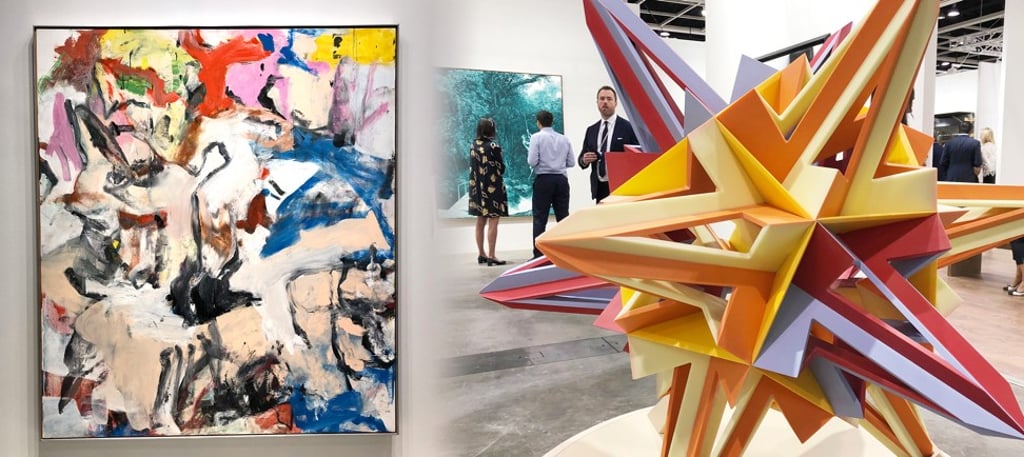
Its harshest critics say the fair it is a celebration of market-oriented mediocrity and the ultimate in consumerism. Even local galleries that participate concede that Art Basel is not so much a direct boost to their bottom line as a generator of buzz. Meanwhile, experts in China question the often-cited claim that the fair has helped turn that country into a great market for contemporary art.
The claim is made by Western galleries, who say that Art Basel is why they have set up permanent galleries in Hong Kong and China.