South Korean artist Lee Bul at Venice Biennale: a statement of separation and tragedy
- Bul is one of South Korea’s best-known artists and her two pieces at the 2019 Venice Biennale reference two of her home nation’s most troubling affairs
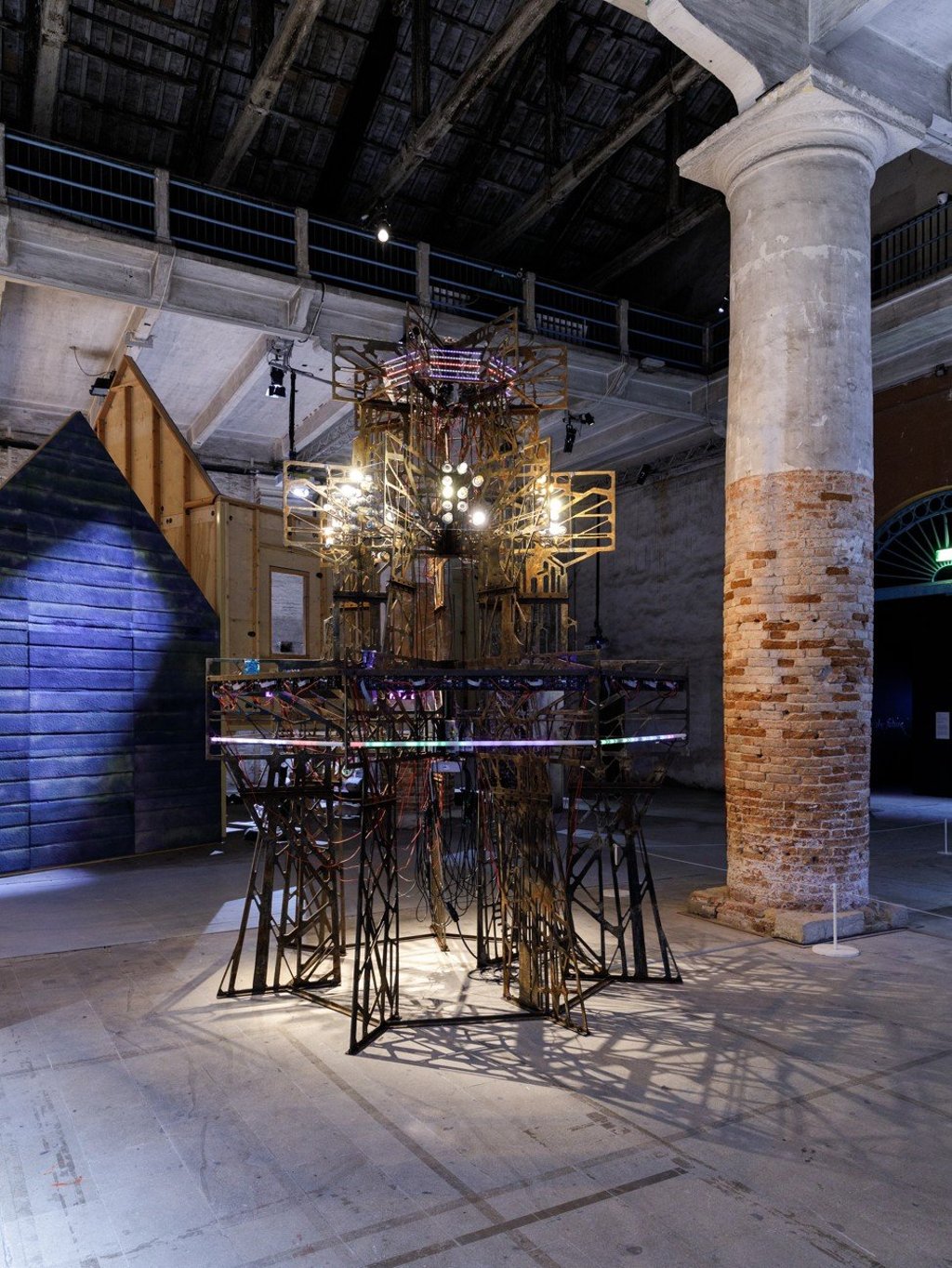
- ‘Aubade V’ is made from the salvaged metal of dismantled guard posts in the DMZ; ‘Scale of Tongue’ references the 2014 Sewol ferry disaster

Every artist picked by curator Ralph Rugoff for this year’s main exhibition at the Venice Biennale has two works in the show: one in the Arsenale and one in Giardini’s Central Pavilion. It is usually quite easy to pick out an artist’s second work after you have seen the first, even if you have never seen their material before. But that doesn’t work with South Korean artist Lee Bul, who has never restricted herself with form or material in her exploration of humankind’s universal contradictions.
Aubade V (2019), at the Arsenale, is her latest in a series named after the term for love songs about lovers separating at dawn. It is a tower made from the salvaged metal of dismantled guard posts in the demilitarised zone (DMZ) between North and South Korea. An LED ticker runs along the inside of the tower, sending out a hard-to-decipher message based on military codes.
In the Giardini is an earlier work that she made after the 2014 Sewol ferry accident – in which over 300 people died – called Scale of Tongue (2017-18), which was previously shown at her Hayward Gallery solo exhibition. A giant tongue made with wetsuit material juts out from the ground like the sinking hull of a ship, surrounded by a sea of undulating fabric stirred up like waves by a hidden fan. Next to it is a flat panel hanging on the wall that looks like an abstract landscape.
“I always want to escape what I did before,” she says when we meet during the frantic opening week of the Biennale.
Meeting in the crowded cafe outside the Arsenale, she was easy to spot with her signature white hair. Getting her to speak about her art wasn’t as simple.