ReviewMusical mismatch: violin drowns out harpsichord in Bach, but pairs well in contemporary works
- Daring pairing of violinist Jennifer Pike and harpsichordist Mahan Esfahani only a partial success, her use of vibrato and modern technique unsuited to baroque
- They performed better in post-war works, one written by her father, and harpsichord sonata allowed Esfahani to show his eloquence and virtuosity

Baroque purists and historical-performance loyalists would have left the Hong Kong City Hall Concert Hall with feathers ruffled on Tuesday evening after a daring Premiere Performances concert by Polish-British violinist Jennifer Pike and Iranian-born harpsichordist Mahan Esfahani.
The duo were convincing in contemporary compositions by Walter Piston and Jeremy Pike, but less well-matched in J.S. Bach’s sonatas. The mismatch was apparent right off the bat in Bach’s Sonata for Violin and Basso Continuo in E minor.
In a work where the violin already takes centre stage, Esfahani’s intricate and delicate harpsichord playing had little chance against Pike’s modern violin technique. Her liberal vibrato, legato bowing and steel string set-up often overpowered Esfahani, especially in the light and playful Allemande and Gigue dance movements.
Listeners were able to attune to the intimacy of the 1966-built harpsichord replica as Esfahani’s delicate, improvisatory opening to Bach’s Harpsichord Toccata in D major unravelled in all its majesty. The elaborate Allegro section that followed was a treat and the Adagio, played with eloquent poise by Esfahani, moved effortlessly into the playful, gigue-like Fugue, displaying his virtuosity to the fullest.
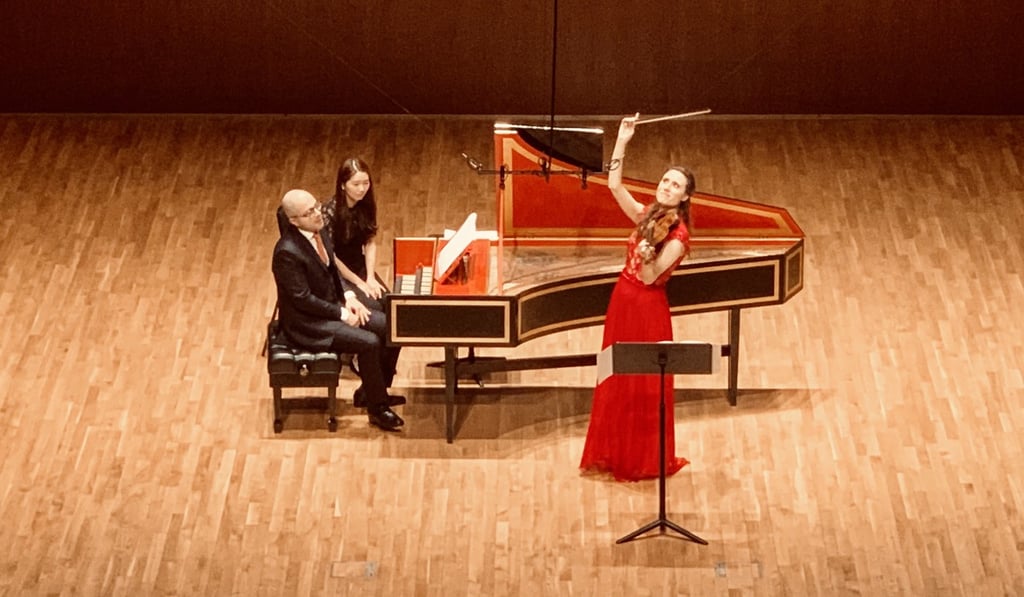
Not to be outdone for virtuosity, Pike’s reading of Bach’s Partita no. 3 in E major for solo violin showed her ever-reliable intonation and technique – stylistically modern as it is, rich in vibrato and barely hinting at early-music performance practice. That aside, one did crave more eccentricity and dynamic variation in the quicker dance movements from Pike and less too polished legato playing in the Preludio and Loure.