-
Advertisement
Indonesia
LifestyleArts

Indonesian puppet show teaches kids about plastic waste

  • Show’s puppets are made of plastic waste that young puppeteers collect and sort through from their own neighbourhoods
  • Indonesia is the world’s second-biggest contributor of plastic pollutants in the oceans, according to a 2015 study

2-MIN READ2-MIN
Puppets made out of plastic are displayed in a primary school in Mataram on Lombok Island, Indonesia. Photo: Sasak Puppeteer School
Reuters

The scene is much like any other Indonesian puppet show: the beat of the gongs is frenetic, the musicians wear intricately patterned traditional costumes and the puppets sway back and forth in a fast-paced exchange laced with maniacal laughter.

But the puppets have bottle-cap noses and long, pink hair made from shredded plastic bags, and are being worked by schoolchildren taking their show on the road to the capital, Jakarta, from their home on the central island of Lombok.
In a year when young people worldwide have followed the example of activist Greta Thunberg in flagging environmental concerns, these Indonesian students are using plastic items to make the puppet characters that bring alive traditional tales.
Advertisement

“Small amounts of waste that we are hoarding in our homes can become a ‘big ghost’,” says Abdul Latief, who set up the first puppet school on Lombok in 2015, to ensure it did not lose its next generation of puppeteers. “It can fill the guts of dead whales, and get stuck in the noses of dead turtles at sea. Therefore we encourage people to resolve waste issues in their own homes.”
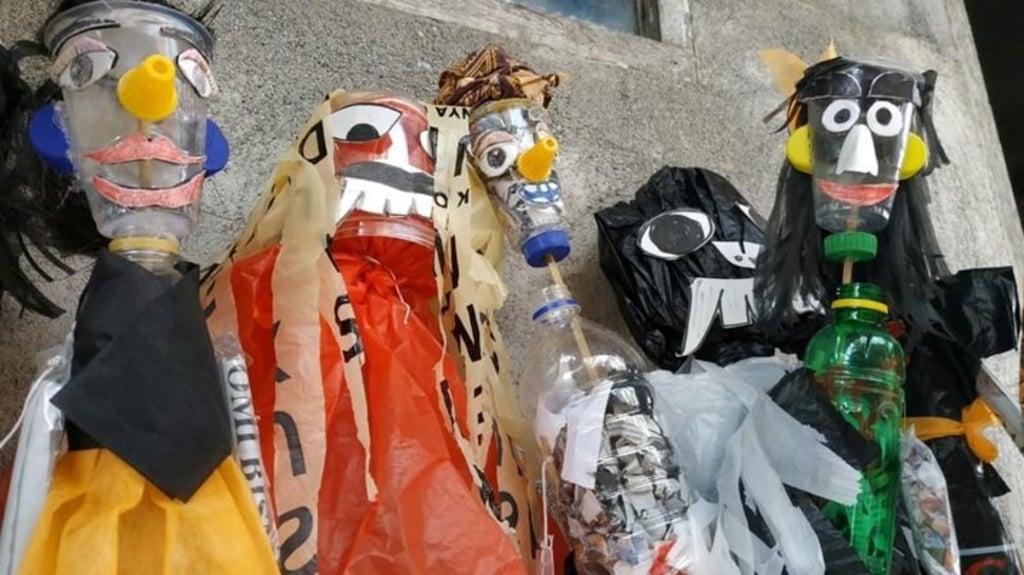

A selection of puppets made out of plastic at a primary school in Mataram, Indonesia. Photo: Sasak Puppeteer School
Advertisement
Puppeteers perform on stage in Jakarta with puppets made out of plastic waste. Photo: Sasak Puppeteer School

He adds that responsible management of waste, such as plastic bottles, cups, cutlery and bags, by each household could benefit the entire community.

Advertisement
Select Voice
Select Speed
1.00x