ReviewHistory of police, prisons and punishment during colonial Hong Kong and a force labelled ‘the most disgusting squad which ever disgraced a British colony’
- Vague criminal codes, unruly police officers and advice to sleep with loaded pistols marked the early years of colonial Hong Kong
- The histories of the colony’s police, courts and jails are vividly bought to life in the book Crime, Justice and Punishment in Colonial Hong Kong

Crime, Justice and Punishment in Colonial Hong Kong: Central Police Station, Central Magistracy and Victoria Gaol, by May Holdsworth and Christopher Munn. Published by Hong Kong University Press. 4/5 stars
The story of the site from which justice was administered for most of Hong Kong’s colonial history, Crime, Justice and Punishment in Colonial Hong Kong is divided into sections covering the Central Police Station, Central Magistracy and Victoria Prison, recounting the overlapping histories of the police, courts and jails respectively.
While this can mean it sometimes runs over the same territory more than once, it makes for a comprehensive window into Hong Kong’s history, particularly that of the 19th century, when the British colony was first establishing itself.
Written in an approachable style, the book is full of historical data, personalities and anecdotes that illuminate that history. It is handsomely illustrated throughout with a range of period photos, drawings and other artworks, and provides detail on everything from the buildings’ various architectural features to the conditions endured by those who used them.
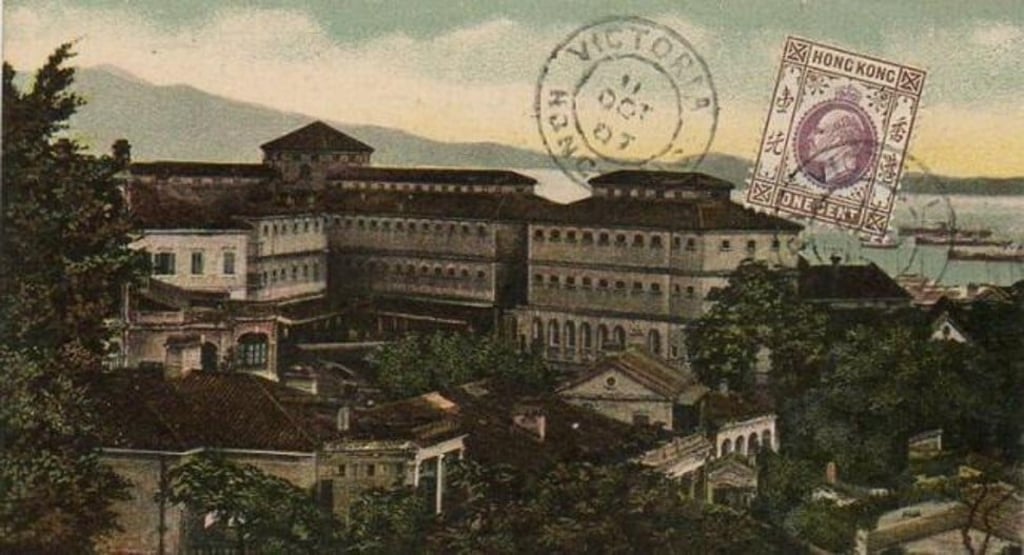
It quickly becomes clear that keeping order in the early days was quite a challenge. The Friend of China newspaper recommended in 1842 that householders should “nail their boxes to the floor, lock them, and sleep with a good pair of loaded pistols under their pillows”. Despite Hong Kong having one police officer to every 255 citizens in 1871, higher than major British cities such as Manchester and Liverpool, and almost exactly the same as today, the police didn’t have the resources to properly investigate crime. Instead they tended to try to prevent it, which translated into a form of social control.
As a result, the criminal code could be pretty vague: being a “rogue or vagabond” was a common offence, as was being a “dangerous or suspicious character”, as was being in possession of anything that could not reasonably be accounted for.