The streets of Hong Kong were his canvas: the legacy of ‘King of Kowloon’ – graffiti artist and urban poet
- Most of Tsang Tsou-choi’s protest calligraphy has been erased from the public spaces that were once his billboards, but his work lives on, some in museums
- Had he still been alive, the eccentric artist would surely have had something to say, in his simple brush strokes, about the recent protests in Hong Kong

Tsang Tsou-choi was an eccentric, one-man protest movement and Hong Kong’s original graffiti artist. Dubbed the “King of Kowloon”, Tsang died in July 2007 aged 85, and while much of his protest calligraphy has been erased from the public spaces that were his canvas, he has inspired a new generation.
“Like a lot of people in Hong Kong, I found myself really motivated by Tsang’s graffiti,” says Alex Croft, a 31-year-old artist best known for his mural of Hong Kong residential blocks outside the G.O.D. lifestyle store in the city’s Central district, which became a social-media selfie phenomenon.
“He was so prolific and so dedicated. Rather than painting just random stuff, he was creating a narrative, and I found the backstory – that he imagined himself to be the king of Kowloon – very moving. Above all, I think most of the graffiti artists in Hong Kong who have followed in his footsteps would admire the fact that he did his own thing, no matter what other people thought,” adds Croft, who is based in Sai Kung in Hong Kong’s New Territories.
Although Tsang emerged from the margins of society, he was taken up by the art world. Today, his works feature in the collections of Hong Kong’s M+ museum of visual culture and museums and art galleries around the world. Before that happened, he endured many years of near obscurity.
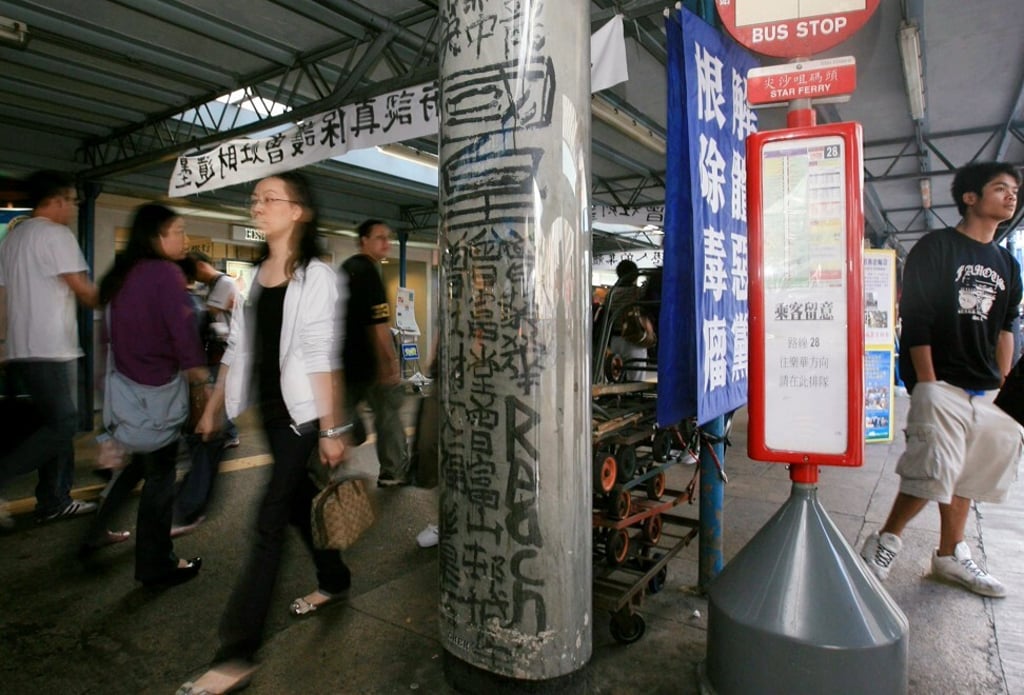
Had he lived, Tsang would be 99 years old today. Born into an impoverished family in southern China’s Guangdong province, at the age of 16 he moved to Hong Kong.
He did not start to paint his graffiti until the mid-1950s, when the city was awash with refugees who had started to pour in from mainland China.