Hong Kong’s Central district isn’t all banks – the people who give it charm and character celebrated in new exhibition
- ‘Serendipity in the Street’ at Tai Kwun mixes data visualisation with new artworks to tell stories of the residents and workers of Central and Sheung Wan
- Curator Ying Kwok says the show and accompanying workshops are prompts for people to start paying more attention to what happens in their own neighbourhoods

Central, as the name denotes, has always been the nerve centre of Hong Kong and a district synonymous with power and money. The local architecture reflects that. Bank headquarters and Exchange Square, the home of the Hong Kong Stock Exchange, mingle with historical symbols of authority such as Government House and the Old Supreme Court Building, imposing a sense of order and immutability.
In reality, generations of residents, workers and small businesses have made their own marks on the streets in ways that are constantly changing everyone else’s experience of Central and nearby Sheung Wan. A new exhibition at Tai Kwun, the once draconian police station and prison compound, pays tribute to these grass roots gestures which amount to a warmer, more human urban landscape than the one dictated by officialdom and big capital.
“Serendipity in the Street” is a presentation that mixes creative data visualisation with newly commissioned artworks to tell stories of Central and Sheung Wan from the bottom up.
The first work that greets visitors is Rhythms (2021), by multimedia artist Steve Hui, who goes by the name “Nerve”. The video wall projection collates scenes and sounds from 14 different locations in Central in a way that suggests a continuous overlay of a unique rhythm.
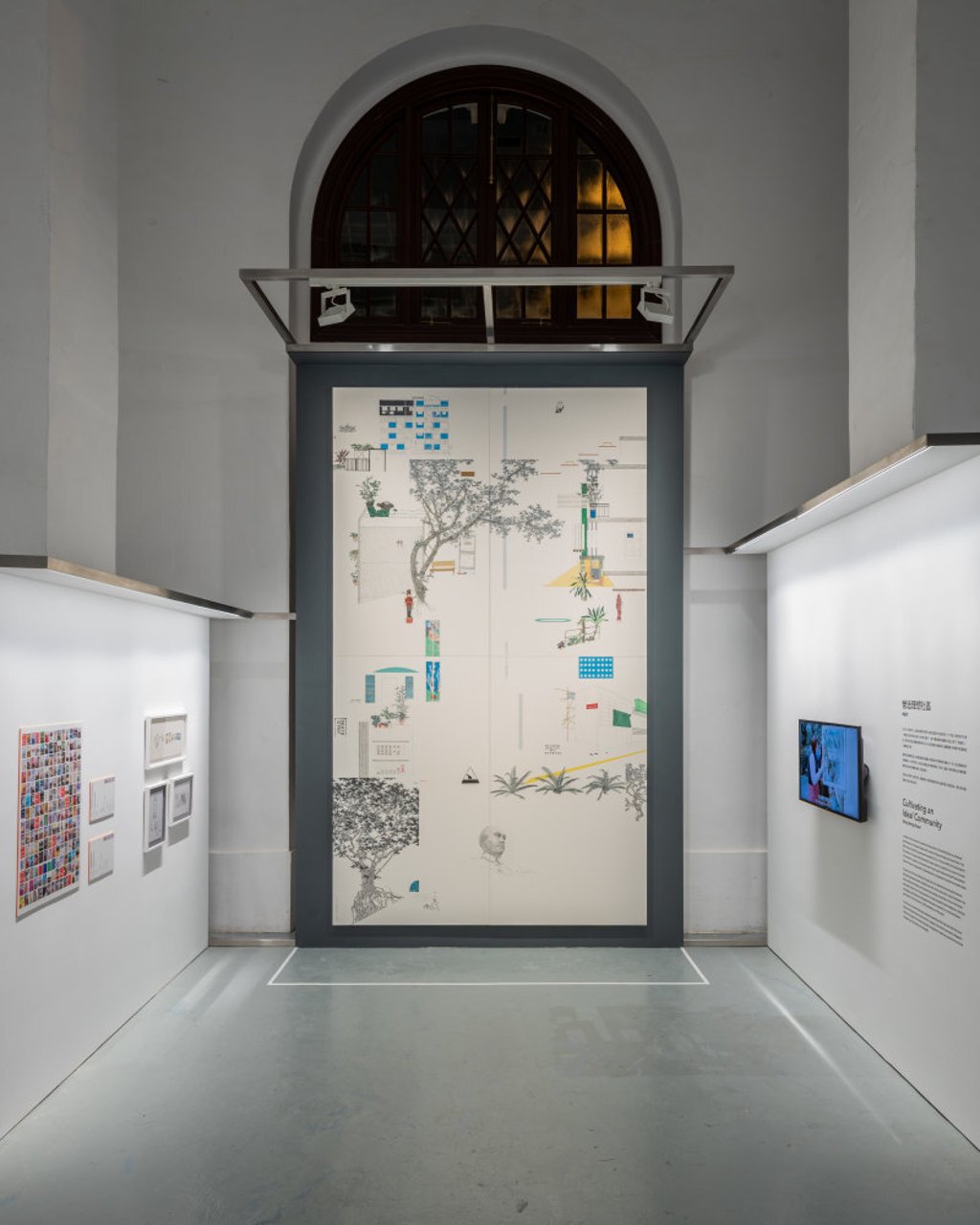
There are several segments based on research conducted by a team led by Brian Kwok, an associate professor at the School of Design at Hong Kong Polytechnic University. A section called “Street Workout” reveals the spots favoured by gym rats who switched to working out in the open after the start of the Covid-19 pandemic, and a statistical breakdown of the most common exercises.
The team also visited a small open area between Gough Street and Shin Hing Street where men have gathered to play Chinese hacky sack every day for over 30 years. It is not the most convenient of places to kick the weighted, feathered discs since there are plenty of steps and restaurants around. But the group, which includes the South China Morning Post’s own photographer Jonathan Wong, has persevered. There is a video showing them at play and short biographies of each of the regulars.