Advertisement

How Singapore’s art scene is making a big comeback in 2023, and why artists question whether any meaningful change is occurring

  • Singapore’s lively post-pandemic art scene is attracting crowds from overseas to compelling shows, and a new five-year arts plan has just begun
  • But censorship remains rife and some artists question the government’s continuing attitude to art

Reading Time:6 minutes
Why you can trust SCMP
“Yen Yen” by Lolay x Kobored is projected onto the facade of the National Gallery Singapore during the “Light to Night” festival, part of Singapore Art Week, which ended January 15. Photo: NGS

Much of the talk inside Art SG, the new art fair that was the anchor event of Singapore Art Week (January 6-15), was about whether there was enough buying and selling to threaten Hong Kong’s position as Asia’s biggest art market.

But outside the discussion about deals at the Sands Expo & Convention Centre and at the concurrent SEA Focus art fair, the Lion City is making a roaring comeback as a regional cultural powerhouse, attracting post-pandemic crowds from overseas to a broad range of compelling shows.

“Everyone we’ve spoken to tells us not to try and copy other countries, that we should be ourselves,” said Low Eng Teong, deputy chief executive of Singapore’s National Arts Council (NAC), during a briefing of international media on January 12.

Advertisement

Certainly, the identity of the notoriously censorious nanny state seems to be shifting.
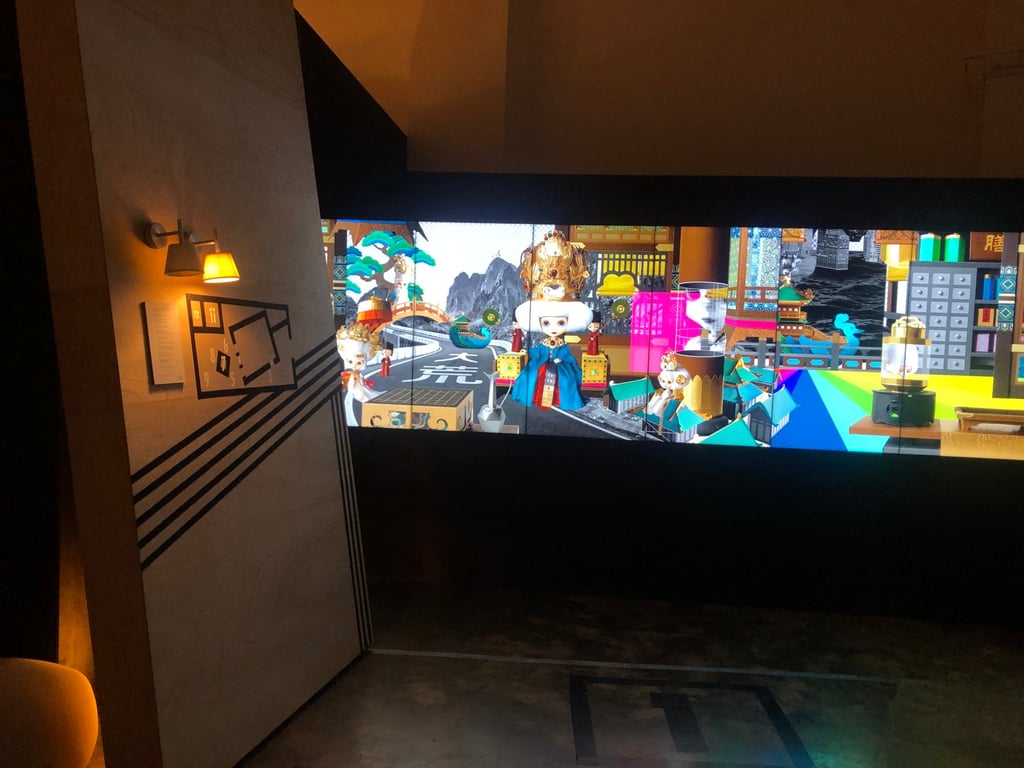
“Strayed Too Far from her Scented Court” (2022) by Chia Ching Kai, a digital animation that is part of a group show at independent art space Supper House, in Singapore. Photo: Enid Tsui
Then there’s the hot money that the art market is after: the so-called “run” culture being embraced by wealthy Chinese families is sending a great deal of assets to Singapore, a comfortable city state with a now-Chinese-owned maximum-security vault facility dubbed “the Fort Knox of Asia”.
Advertisement

Mandarin is also widely used in Singapore and the cosmopolitan sovereign nation is seen as a haven from China’s (including Hong Kong’s) growing government restrictions and, until recently, draconian Covid-19 measures.

Advertisement
Select Voice
Choose your listening speed
Get through articles 2x faster
1.25x
250 WPM
Slow
Average
Fast
1.25x