Hong Kong art show reflects ‘identity crisis’ of Asian artists living between East and West, with new twist on ‘blurred’ Japanese painting style
- Moroism originated in 19th-century Japan as an art style in which outlines were replaced with haziness, and it forms the basis of White Cube gallery’s exhibition
- The Asian diaspora artists use this indeterminacy to reflect shifting ideas of ‘home’ and the challenges of adapting to life far from one’s birthplace

Ten years ago, the Japanese-owned art gallery Beijing Tokyo Art Projects, located in the 798 Art District of the Chinese capital, launched a series of exhibitions under a new concept called “Neo-Moroism”.
It was based on Moroism, a Japanese painting style that emerged in the late 19th century during the Meiji Restoration – a period that saw Japan change from a feudal society to a modern democracy.
Among the kinds of artistic experimentation that developed with the influx of Western cultural influences, this particular school was distinguished by the elimination of outlines and the haziness of subject matters – hence the name, which means blurred in Japanese.
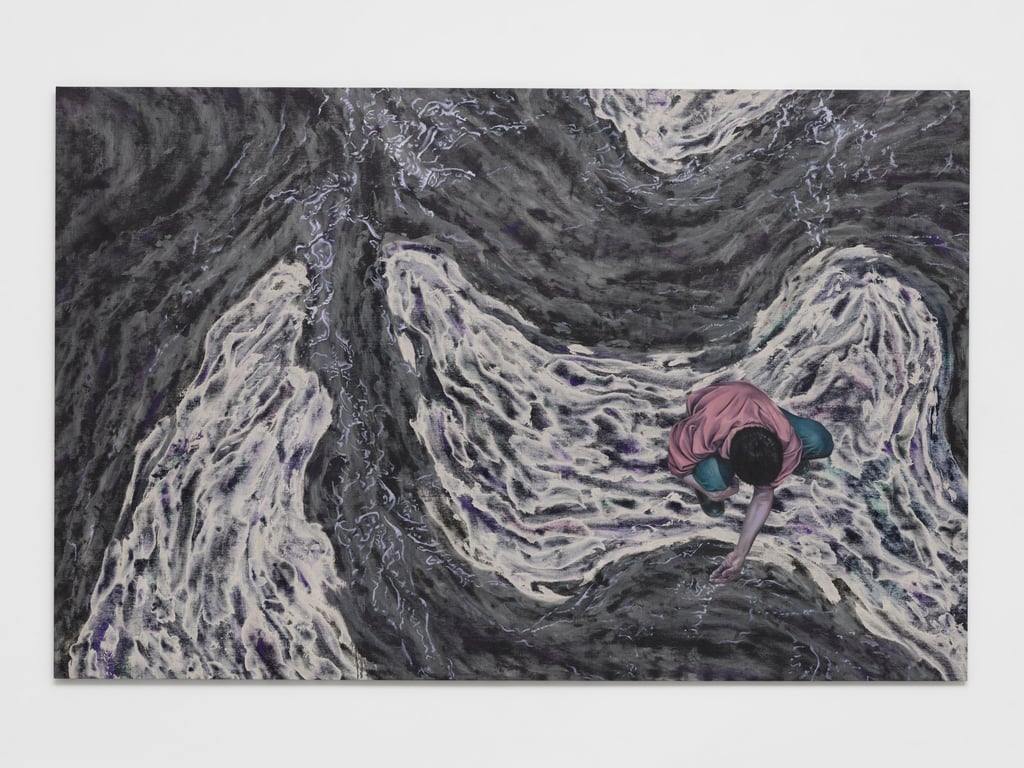
And now in Hong Kong we have “New Moroism”, an exhibition of works by a group of artists of Asian heritage whose ideas of East versus West are far more indistinct, as hinted at by their biographies: