From Hiroshima to Fukushima: the big picture on Japan’s tsunami tragedy
In the Wake, a photographic exhibition in New York, is a sensitive three-part exploration of the March 11, 2011 earthquake, tsunami and nuclear disaster that devastated Japan’s Tohoku region

The sophistication of “In The Wake”, a sensitive, mournful photographic exhibition focusing on the 2011 tsunami that devastated part of Japan’s northeast, lies more in what it doesn’t show than what it does.
One would expect a selection of photojournalistic works documenting the event, and its aftermath. But Anne Nishimura Morse and Anne Havinga, curators of the New York show, cast their net much wider to include artistic responses to the disaster, historical context, and geographical information.
The result is a broad, lyrical thesis on the effects of the earthquake, tsunami, and the explosion of the Fukishima Daiichi nuclear plant, which devastated Japan five years ago this month.
Visitors can certainly see stark, disturbing images of the destruction of the region, but that’s not the whole story. The exhibition locates the disaster, which was in part nuclear, in the context of the bombings of Hiroshima and Nagasaki, and filters it through the prism of wider notions like capitalism and ecology.
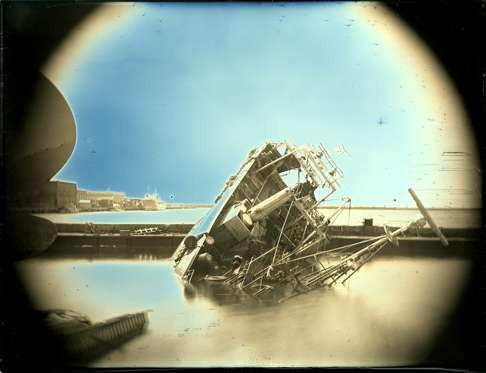
“In the Wake: Japanese Photographers Respond to 3/11” – a poetic title that implies both a past event and a period of mourning – runs at the Japan Society Gallery until June 12. It’s a second showing for the exhibition, which was organised by the Museum of Fine Arts Boston, where it first showed in 2015.