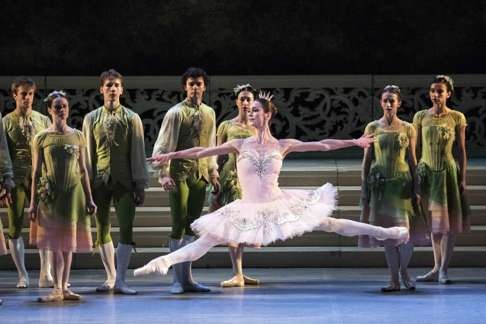
Review: lead dancers shine in The Sleeping Beauty, Hong Kong festival finale
The dancing was first class and the designs ravishing in this Mikhailovsky Ballet production, but it’s hard to accept the pointless, banal reimagining of Marius Petipa’s timeless choreography

The closing programme of this year’s Hong Kong Arts Festival, and its only ballet offering, brought St Petersburg’s Mikhailovsky Ballet in Nacho Duato’s version of The Sleeping Beauty.
Visually stunning, with simplified story and choreography, it’s easy to see why the production’s Reader’s Digest approach has delighted general audiences.
Polina Semionova brought radiant star quality and a lovely amplitude of movement to the title role (in the March 19 performance) while Angelina Vorontsova danced with good attack but was more soubrette than imperial princess. The hero of the hour was Leonid Sarafanov, who partnered both ballerinas beautifully and danced with effortless elegance and elan.
It’s equally easy to see why the production has dismayed critics and ballet aficionados.
The original version of The Sleeping Beauty is the greatest achievement of classical ballet’s greatest choreographer, Marius Petipa – nowhere in dance is there a more perfect expression of music through movement. It’s the ultimate benchmark of classical technique and style, so it’s hard to understand why Duato, renowned for his contemporary work, should have chosen to re-choreograph the ballet using classical steps.