Chinese antiques auction outlook in Hong Kong is cautious, despite bidding war for scroll
Observers of Chinese classical art market wary of reading too much into auction of calligraphy scroll for 25 times its low presale estimate

A 95-minute bidding war would have made headlines even when the Hong Kong auction market was at its frothiest a decade ago, so a recent protracted battle over a 14th century Chinese calligraphy scroll was all the more remarkable for coming four years into a market downturn.
Rao Jie’s 700-year-old, six-metre long, cursive-script calligraphy of two pieces of prose attracted more than 200 bids when it came up for sale during Sotheby’s 92-lot Fine Classical Chinese Paintings sale on April 10, 2025.
Auctioneer CC Wang was positively giddy as she called out the bids. The scroll’s price was estimated in the HK$10 million to HK$20 million range presale; the final hammer price of HK$213.5 million (US$27.5 million) meant the buyer, who bid by phone, would be paying HK$250.1 million after adding fees for the auction house.
There is always strong demand for calligraphy from China’s Sung and Yuan dynasties, since the period from the 11th to the 14th century marked the pinnacle of the art form, Steven Zuo, head of Sotheby’s classical Chinese Paintings department, says.
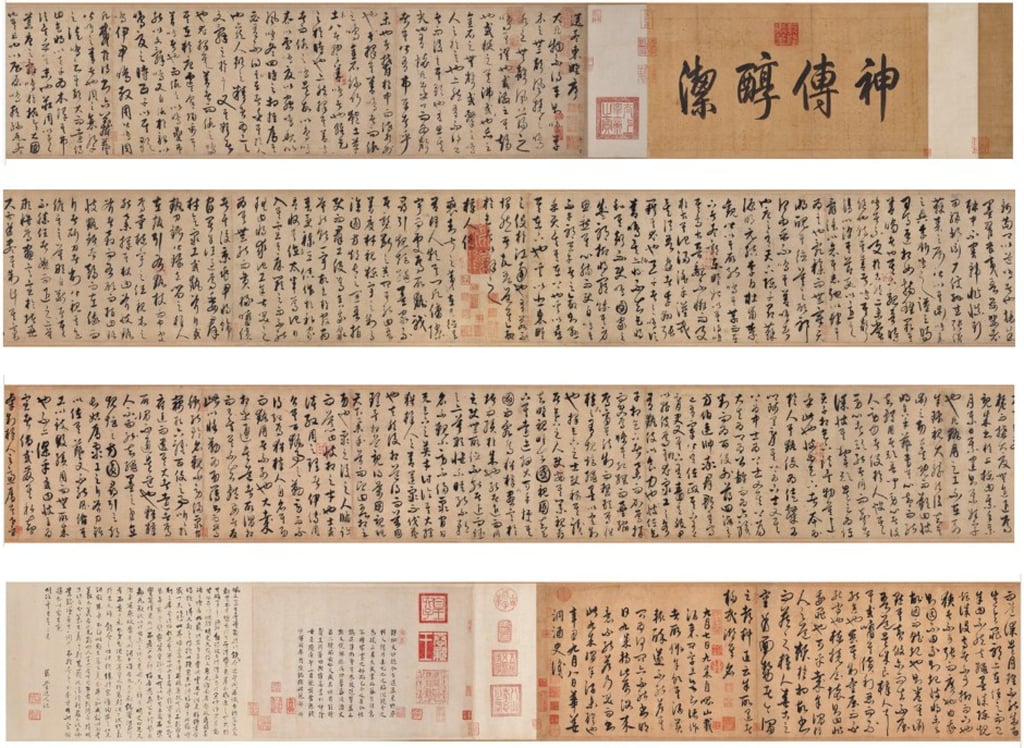
Moreover, Rao’s scroll belonged to the Qing imperial collection and was appearing on the market after passing through a long line of distinguished collectors.