Major Hong Kong literary work The Drunkard reimagined for the stage by German director
‘Naivety brews creativity’ for German director Sebastian Kaiser, who has adapted Liu Yichang’s The Drunkard for the Hong Kong Arts Festival

Part surrealist descent, part literary manifesto, The Drunkard by Shanghai-born Liu Yichang is a quintessential piece of Hong Kong literature and a landmark of modernist experimentation.
The 1962 stream-of-consciousness novel – the first of its type written in Chinese – follows an unnamed writer struggling against a shallow, commercialised society. As he sinks into alcoholism against a gritty, neon-lit urban backdrop, his personal collapse serves as a poignant allegory for the brutality of World War II and the exploitation of the working class in post-war Hong Kong.
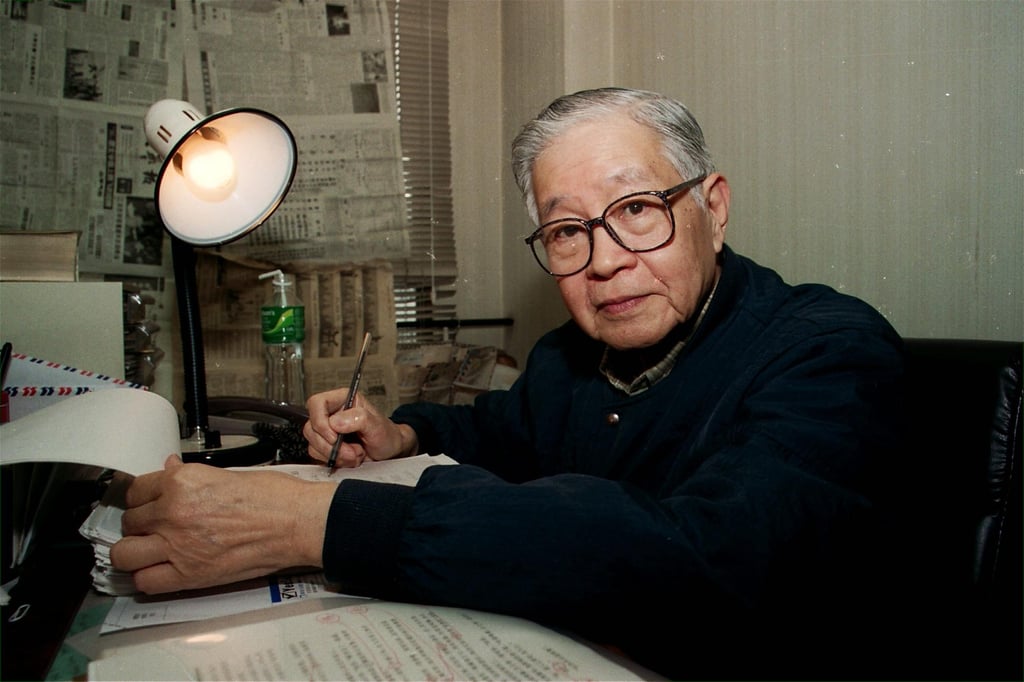
For this year’s Hong Kong Arts Festival, this well-known text is being placed in the hands of an unusual interpreter: Sebastian Kaiser, a German director and dramaturge who does not read Chinese.
Kaiser’s production, which debuts on February 28 at the Hong Kong Cultural Centre, also represents a bold, cross-cultural experiment: his cast will perform in Cantonese, which he does not understand.
Though Liu penned the novel more than 60 years ago and a world away from Kaiser’s native Germany, the director argues that the story’s core struggle is not bound by geography.
“The book asks very universal questions of how to make uncompromised art, how to resist certain commercial tendencies, how to resist the influence from editors and from the pressure of the audience,” Kaiser tells the SCMP. “It’s on the one hand a concrete context of Hong Kong from the 60s, but is always connected also to this wider, universal context.”