We join Japanese artist Shigeo Otake on his first real Hong Kong visit. It is different
Otake takes in Mong Kok’s streets and forages for cordyceps in Tai Po as his solo Hong Kong debut exhibition runs at White Cube

The last time Shigeo Otake visited Hong Kong was in 1985, for a brief stopover long enough for a quick meal before continuing his journey.
More than four decades later, the 71-year-old Japanese artist, who trained in early Italian Renaissance techniques at Kyoto City University of Arts, has returned – this time for his solo Hong Kong debut at art gallery White Cube.
In early July, Otake’s exhibition, “Agoraphilia”, opened at the Hong Kong branch of the international gallery, as part of a White Cube initiative to show well-regarded artists not represented by the gallery. The July 9 preview drew admirers from as far as South Korea, Singapore and Shanghai.
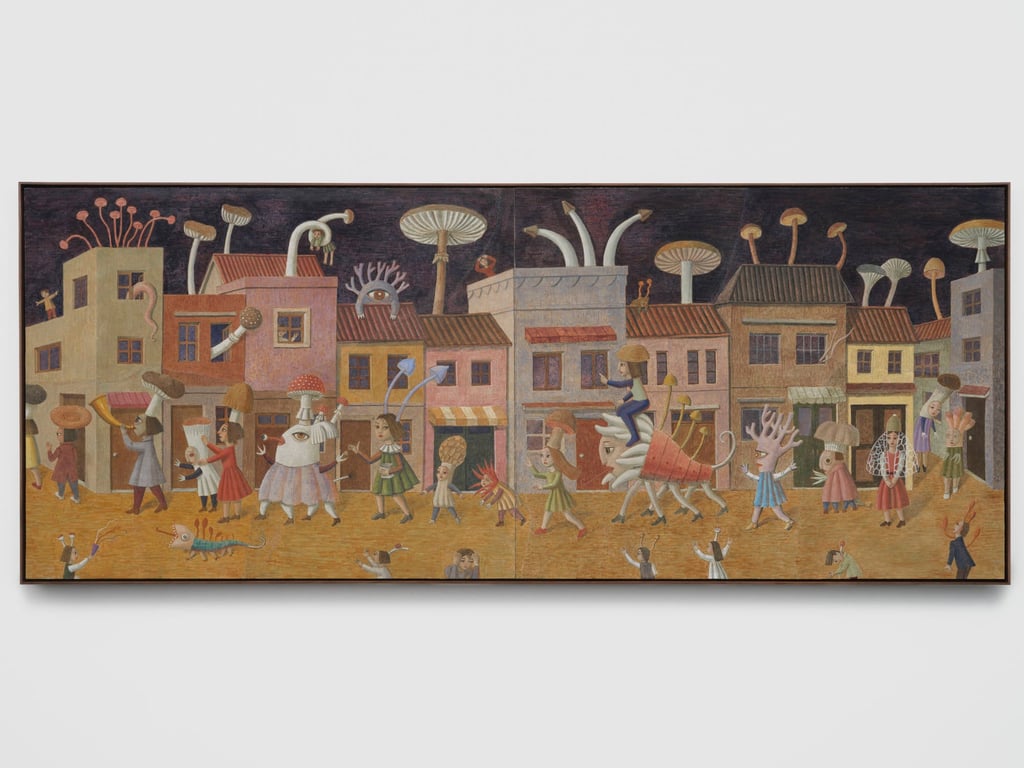
The buzz is well-earned. Otake – currently the subject of a survey show at the Consortium Museum in Dijon, France – has garnered international acclaim for his fresco and egg tempera paintings that transport viewers into phantasmagorical realms of otherworldly hybrid creatures roaming medieval-style towns.
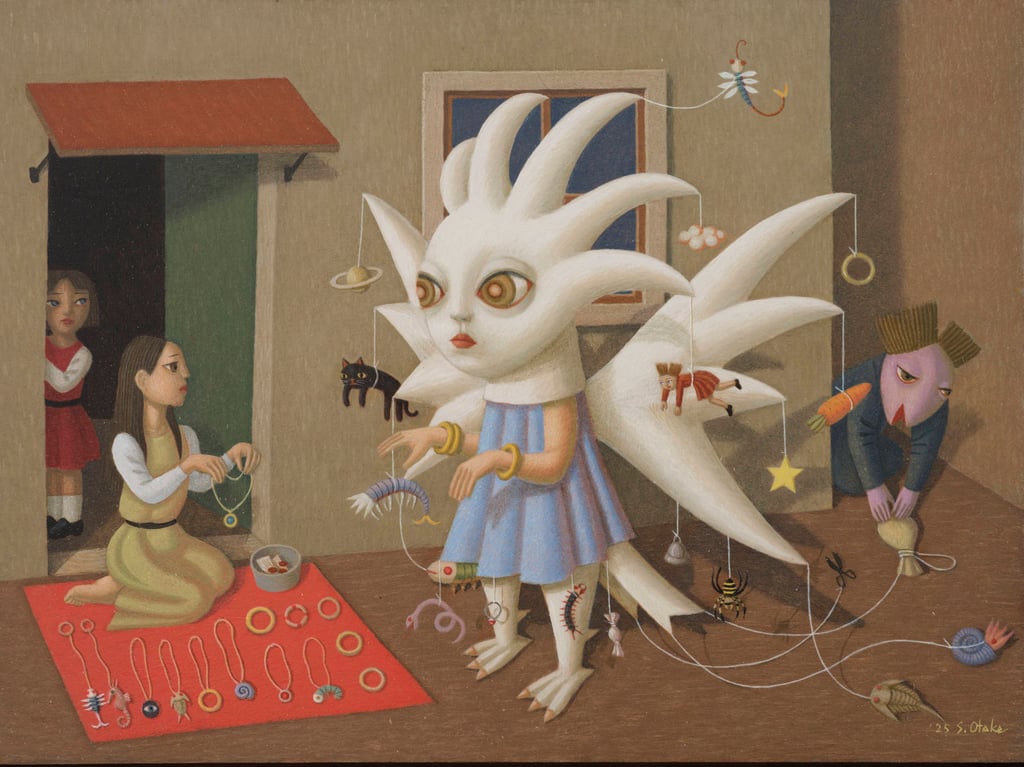
Otake’s paintings unfold like allegories. In The Magnate (2025), a birdlike gargoyle, fixated on purchasing a necklace from a kneeling figure, stands in the centre of the piece. It is oblivious to the thief behind it, taking one of the gargoyle’s tethered items. The scene serves as a metaphor for the insatiable desire of art collectors, whose hunger for new acquisitions blinds them to what they already own.