Book review: This is Bacon, by Kitty Hauser
Francis Bacon's perversity is part of the attraction of his art, as is the terrifying realism that lies behind the tricks and tactics of his work. Few have been so insistent in their belief that humans and animals are both at the mercy of natural compulsions - lust, fear, anxiety or the urge to violence. Less easy to communicate is the exhilaration his work evokes.
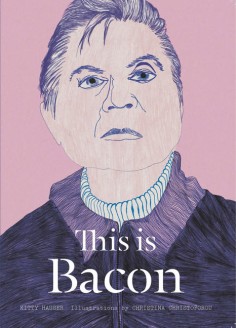
by Kitty Hauser
Laurence King

Francis Bacon's perversity is part of the attraction of his art, as is the terrifying realism that lies behind the tricks and tactics of his work. Few have been so insistent in their belief that humans and animals are both at the mercy of natural compulsions - lust, fear, anxiety or the urge to violence. Less easy to communicate is the exhilaration his work evokes.
Fascination with the British artist (1909-1992) was greatly stimulated by David Sylvester's conversations with him, first published in 1975. Since then, much of the literature has been a mixture of serious criticism and low gossip. Kitty Hauser follows in this vein, but her pithy introduction to the man and his art cuts to the quick.
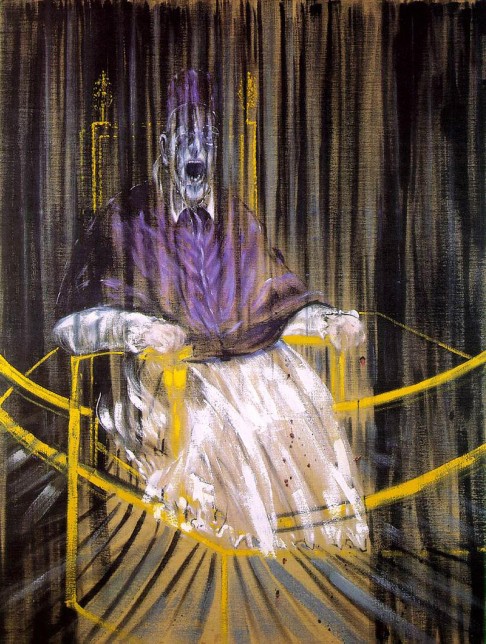
"Popes and screams should not go together," she says of the disconcerting series of paintings based on Diego Velasquez's portrait of Pope Innocent X, which Bacon morphed with the screaming face of the nurse in Sergei Eisenstein's film Battleship Potemkin. "The instinctual human - akin to an ape - breaks rudely through the surface of the civilised human, decked out in the pontiff's regalia. The pope is not, it turns out, immortal or inhuman. It's like seeing the Queen scream."
Hauser argues that this interest in the juxtaposition of public veneer with private reality recurs in Bacon's paintings. It directed his interest towards the portrait, and, though far from being a conventional portraitist, he made this his main focus during the 1960s and '70s. There is a connection here with his homosexuality, as Hauser suggests. Many deplore the double life that gays lived until homosexual acts were decriminalised in 1967 - but Bacon liked it this way, preferring to regard his sexuality as perverse and punishable, relishing the criminal aura that clung to an activity forced underground. No role model, he, for gay rights.
It could be regretted Hauser does not challenge the received view of Bacon, but in a book resting mostly on secondary sources, it would be a mistake to build a theory on the mythologies that envelop this artist. Instead, she repackages outrageous facts about Bacon's life, as well as observations on his art, with brevity and punch. There are no chapters in this book, merely brief thematic subheadings followed by passages lasting less than a page or two.