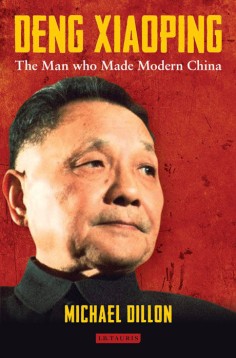
Book review: Deng Xiaoping: The Man Who Made Modern China, by Michael Dillon
Statesman Deng Xiaoping's grit and organisational skill made him one of China's most effective leaders. His four Singapore-inspired reforms - in farming, industry, defence and technology - transformed the mainland during the 1980s, paving the way for today's mega-state.

by Michael Dillon
I.B. Tauris

Too bad that just a decade after Deng announced his reforms, he was denounced as the monster responsible for smashing the 1989 Tiananmen democracy movement. The stigma remains, but his notoriety is overblown, according to modern Chinese history expert Michael Dillon.
"Deng was an old military man who had not hesitated to take life-and-death decisions during wartime, but his track record in power speaks of a man who valued consensus, rather than unnecessary conflict, and who certainly did not want a repetition of the violence and persecution of the Cultural Revolution years," Dillon writes.
But Deng can't be cleared of blame for the carnage: he should have been better informed and might have been rash, Dillon adds.
"However, the responsibility for the military intervention and the deaths lies primarily with his duplicitous and manipulative colleagues - [premier] Li Peng and [president] Yang Shangkun of the central government, and [party secretary] Li Ximing and [mayor] Chen Xitong of the Beijing Communist Party Committee," he writes. Strong words.
Deng was born in 1904 in Sichuan province, the son of a middle-class landowner. He studied and worked in France and Moscow; before his 1926 return to China, he was converted to the communist cause. After joining Mao Zedong's revolt as a strategist, Deng made his name in the 1934-35 Long March when Communist troops dodged their Nationalist pursuers. He played a key part in resisting the Japanese occupation then spearheaded the 1948-49 campaign that ousted Chiang Kai-shek's Nationalists.