E-books and audiobook reviews: non-fiction
“Don’t just do something. Sit there.” Pico Iyer recalls that Japanese saying in considering when stillness is most needed. In this book – about the adventure of going nowhere – the writer explains why it’s easier to see the world more clearly by stepping away from it.
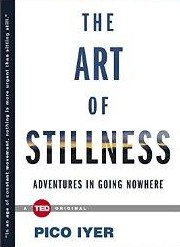
by Pico Iyer
TED Books (e-book)

“Don’t just do something. Sit there.” Pico Iyer recalls that Japanese saying in considering when stillness is most needed. In this book – about the adventure of going nowhere – the writer explains why it’s easier to see the world more clearly by stepping away from it. That may mean just taking a few minutes every day to sit quietly and “do” nothing. Pico, whom, ironically, many know from his travel writing, says that having traversed so many continents for work, movement makes “richest sense when set within a frame of stillness”; for him, that’s a setting lacking in distractions. This book, born from a TED talk, contains little in the way of religion, although melancholic troubadour Leonard Cohen’s Zen training – involving much stillness – opens the book. Perfect as a pick-me-up after the festive season, The Art of Stillness should encourage readers to consider this finding from the field of “interruption science”: it takes 25 minutes to recover from phone calls, which means, for those fielding calls every 10 minutes, “we’re never caught up with our lives”.

by Nicolette Hahn Niman
Chelsea Green Publishing (e-book)

Even vegetarians will admit Nicolette Hahn Niman presents a good argument in her defence of beef. A rancher and a former environmental attorney, she once saw beef as "public enemy No1", believing cattle were the cause of overgrazing that denuded vast tracts of land and, among other things, that raising livestock aggravated world hunger. But Niman, a vegetarian, came to different conclusions after undertaking research that showed, for example, that land-management problems were the culprit: improper grazing was to blame for many of the environmental ills associated with farming. Citing countless studies and numbers, she drives home the point that animals can offer the best ways to improve soils without chemical fertilisers and indeed are needed for healthy grass. She cites grass advocate Allan Savory; shows why the poor need livestock for their livelihoods, especially if they live in areas that can't support crops; and points to incorrect figures that once put the blame for greenhouse gas emissions largely on livestock.