Philip K. Dick's The Man in the High Castle - what if the Nazis had won the war?
Many of us are fascinated by the reclusive author: the literary sage who produces one work every few decades, holed up in a dusty castle of old books, worn-out typewriters and crumpled pages. J.D. Salinger, Harper Lee, Thomas Pynchon, Emily Dickinson - the concept has become almost a badge of honour for many a writer.
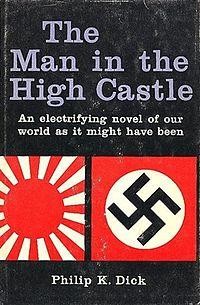
by Philip K. Dick
Putnam
Many of us are fascinated by the reclusive author: the literary sage who produces one work every few decades, holed up in a dusty castle of old books, worn-out typewriters and crumpled pages. J.D. Salinger, Harper Lee, Thomas Pynchon, Emily Dickinson - the concept has become almost a badge of honour for many a writer.
Philip K. Dick was not one of them. In fact, he was very much the opposite, an incredibly prolific sci-fi author who regularly gave speeches and made public appearances, not to mention approved the movie rights to numerous works, including Blade Runner, Total Recall and A Scanner Darkly. And while The Man in the High Castle isn't Dick's most admired novel, it might be his most important.
It is set in an alternate reality where the Axis powers have won the second world war, and the German Third Reich and imperial Japan rule much of the world. Within this parallel universe are a selection of American civilians living their everyday lives. And beyond them is Hawthorne Abendsen, the titular man in the high castle, a reclusive author who wrote the best-selling "The Grasshopper Lies Heavy", a novel-within-a-novel that posits that the Allies won the war.
In many ways, Castle was Dick's attempt to replicate and satirise the "supreme" work that many a withdrawn writer has failed to create. The ambition is incredible and the author comments on a vast array of subjects.
There's his metaphysical sci-fi of shifting realities and alternate worlds. There's a slightly shallow focus on history and politics, and how perspectives shift over time and space.