Book review: Coal Wars - global warming debate laid out
Even-handed analysis of whether the transition away from burning coal for energy can be managed in time to stem impact of climate change finds China better placed than West to achieve it


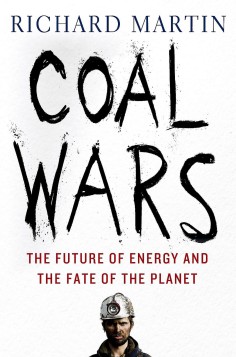
Still, Martin does more than an adequate job of laying out both sides of the debate, both in the US and in China, the world's largest carbon emitter since it surpassed the US in 2007. Both countries struggle with the task of weaning themselves off the cheap, abundant energy coal provides despite the increasing damage it does to the environment.
Mention environmental catastrophes and incidents such as the Exxon Valdez leap to mind. Martin reminds us that coal more than holds its own in this category. He cites the 2008 failure of a containment dam at a Tennessee mine that released a billion-gallon flood of coal ash slurry, 100 times the amount of pollutants from the Exxon Valdez, as well as a 2013 "coal storm" in China that left a grimy black coat on people and the environment. Such incidents cannot be easily dismissed unless your one-track mind prevents you from taking a broader perspective.
The author examines the difficult transition away from coal through the lives of those who rely on the rock for a living, the environmentalists who clean up after them, and the well-intentioned who are attempting - vainly for the most part - to create a post-coal economy that won't impoverish the coal dependent. "The coal wars make people think and speak in biblical terms. Environmental catastrophe on the one hand, economic meltdown on the other," Martin writes.
Big Coal will also be infuriated by his judgment that China stands a better chance of addressing the climate change challenge than the US. But his reasoning - that China is a more dynamic, energetic society that is accustomed to upheaval and is not encumbered by democratic considerations - makes sense unless your thinking is clouded by misguided patriotism.
Despite what advocates on both sides stubbornly maintain, Martin's second greatest service is assuring us that there is no black and white here, no simple elegant solution that will keep distress and cost to a minimum.