
Advertisement
Lessons from China's history
LifestyleChinese culture
Wee Kek Koon

Reflections | How fortune-telling in ancient China decided vital affairs of state, from wars to farming

Predicting the future was serious business during China’s Shang dynasty, when ‘oracle bones’ helped kings make big calls

Reading Time:2 minutes
Why you can trust SCMP
1
A painting depicts fortune-tellers in China in the 1800s. Although just a fad today, divination was serious business during the Shang dynasty. Photo: Historica Graphica Collection/Heritage Images/Getty Images

Fortune-telling bars with Chinese characteristics are one of the latest fads in China.

Instead of using tarot cards or crystal balls, establishments in Beijing use the traditional Chinese method of qiuqian (kau cim in Cantonese) to tell fortunes.

Seekers either pull one of many numbered bamboo sticks out of a cylinder, or gently shake the cylinder until a single stick gets dislodged and falls to the table or floor.

Advertisement

The number on the stick corresponds to a chit, on which a cryptic message is written. The psychic then interprets the message and tells their client things they desperately want to hear, or vague twaddle that could apply to anyone.
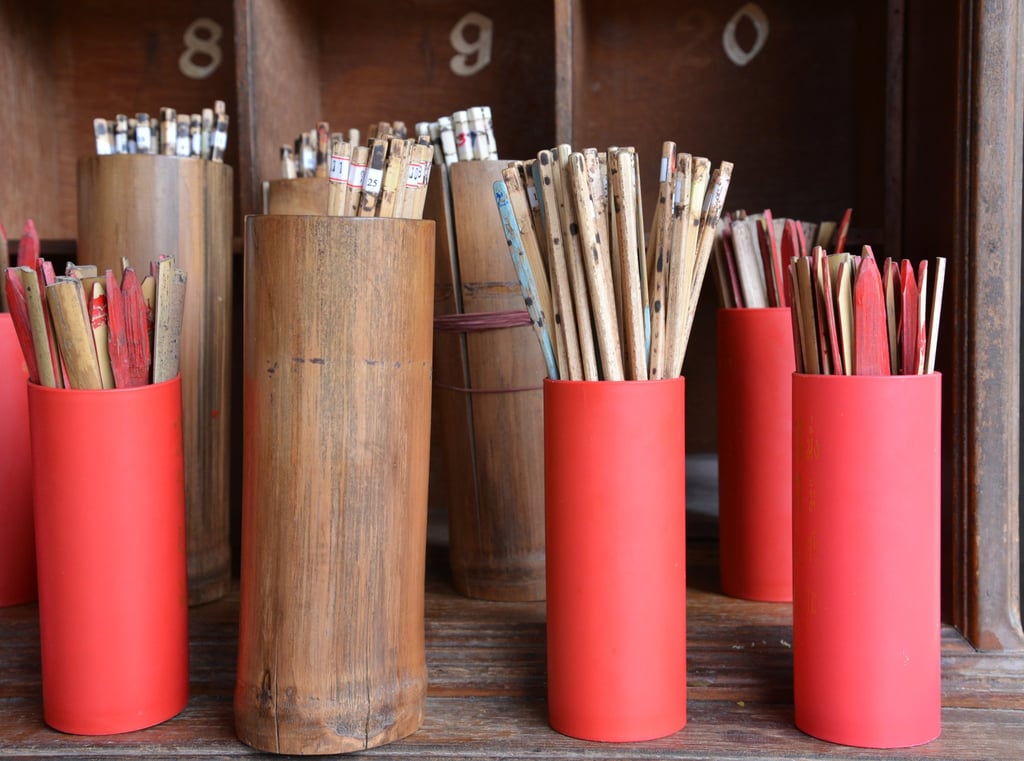
Numbered bamboo sticks in cylinders like these are used in qiuqian, a traditional method of fortune-telling that is popular in China. Photo: Shutterstock
On my very first visit to mainland China in the mid-1990s, the wife of the friend we were staying with in Hangzhou took us to a blind fortune-teller living in a dodgy neighbourhood.
Advertisement
Advertisement
Select Voice
Choose your listening speed
Get through articles 2x faster
1.25x
250 WPM
Slow
Average
Fast
1.25x