
How the lion became a symbol of Chinese identity and cultural exchange
From homes to temples, lion figures are ubiquitous in China. Why is an animal that has never lived in the wild there so culturally relevant?

Researchers at Italy’s University of Padua have traced the surprising origins of one of Venice’s most enduring symbols: the bronze winged lion that stands atop a column in St Mark’s Square.
Long believed to be a medieval Venetian creation, or perhaps a work from Syria or Anatolia (modern-day Turkey), the sculpture’s true story now points further east.
Through lead isotope analysis, scholars determined that the copper used in the bronze alloy came from the Yangzi River basin in China. This revelation suggests the statue was not locally made, but rather originated in East Asia.
Stylistically, too, the lion recalls Chinese works, especially those from the Tang dynasty (618-907). The discovery of traces of horns, later removed, suggests that it was originally a zhenmushou, a fierce guardian of Chinese tombs.
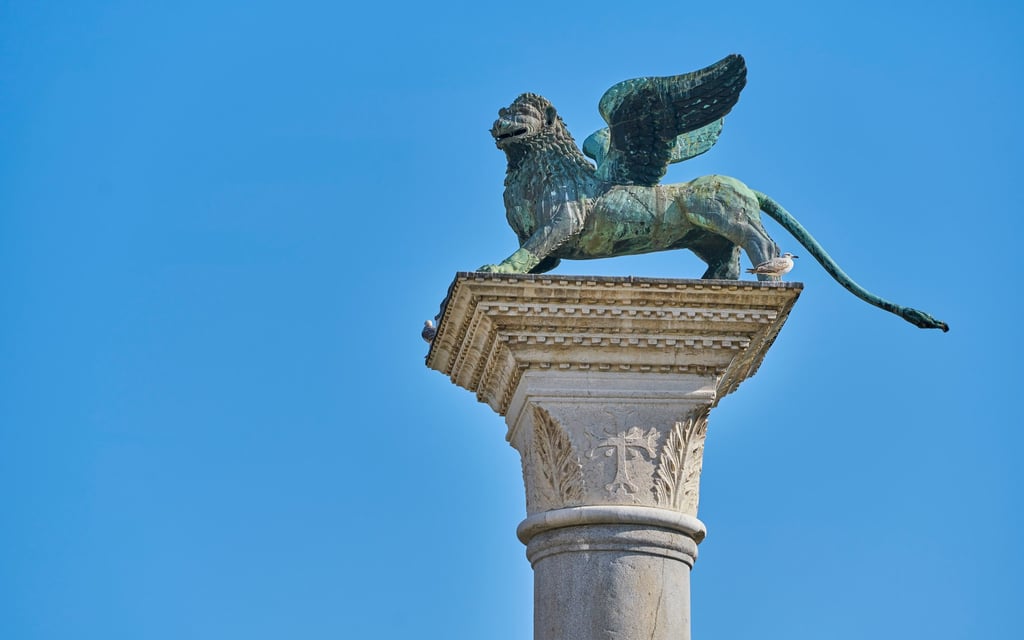
Researchers propose that Marco Polo’s father and uncle may have acquired the sculpture during their stay in China during the 13th century, later sending it home to Venice. Once in Italy, the piece was repurposed into a civic emblem of St Mark, with adaptations such as the removal of horns and the addition of a stylised “wig” to suggest a lion’s mane.