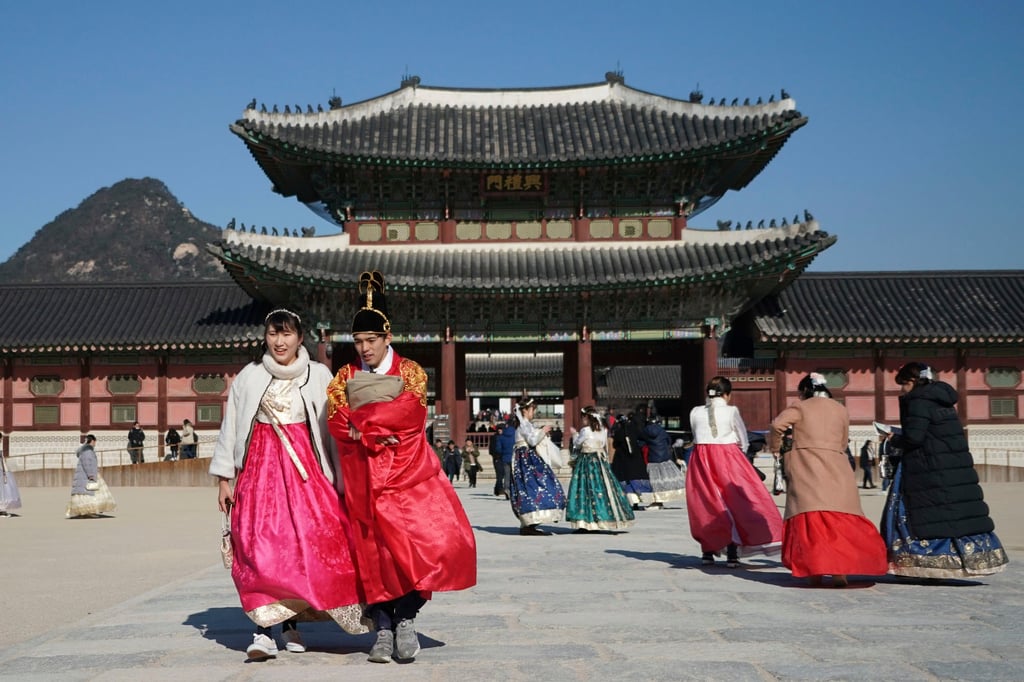
A Korean horsehair underskirt sparked a fashion frenzy in China during the Ming dynasty
The maweiqun, an underskirt made from horsehair, was so popular in the Ming dynasty that the government banned it

The crinoline – a stiff petticoat that provides voluminous structure under a gown – was a staple of 19th-century European fashion. Although the version most recognisable to people today is the crinoline cage, these petticoats were originally made out of wefts of horsehair.
According to scholars of Chinese and Korean history, horsehair underskirts in Asia significantly predate European crinolines.
Wang Qi (1432-1499), a Ming dynasty writer and court recorder, documented the existence of maweiqun in his collection of notes, Yupu Zaji.
“The structure of the skirt consists of hair from the tails of horses tied over the underwear,” wrote Wang. “Those who are fat wear one skirt, and those who are slim wear two or three skirts, making the overall garment like an umbrella.”