Origin of Hong Kong’s ‘peace buns’, Cheung Chau Bun Festival’s iconic snack
‘Ping on bao’ are both happily eaten and the focus of the festival’s famous bun scrambling competition. One baker explains how he makes them

For a few days every spring, crowds of people jump on ferries taking them to Hong Kong’s outlying island of Cheung Chau, drawn by the Taoist spectacle that blends religious devotion, carnival parade and athletic competition: the Cheung Chau Bun Festival.
Also known as the Da Jiu festival, the event – which this year runs from May 21 to 25 – coincides with Buddha’s Birthday on the eighth day of the fourth lunar month, falling on May 24 in 2026.
The festival’s highlights include the Piu Sik parade, where children dressed as deities are carried through the streets on steel frames, and the bun scrambling competition, which has become one of the most iconic traditional events in Hong Kong.
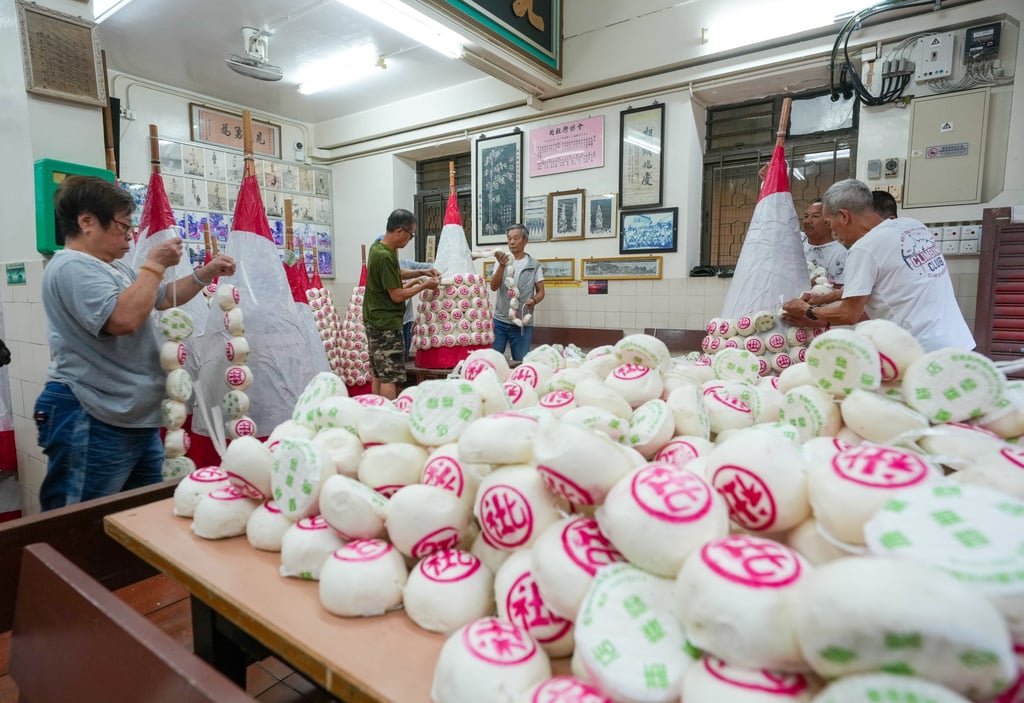
Amid the bamboo structures and vibrant processions, a big part of the festival rests on something small and sweet: the ping on bao (“peace bun”), a steamed bun with a red or pink stamp on the surface denoting the Chinese characters for peace. Not just a popular holiday snack, it is also a living artefact of Hong Kong’s maritime history.
The reverence for the ping on bao – and the origins of the festival itself – dates back to the late Qing dynasty. Local lore tells of a devastating plague and fierce pirate raids that ravaged the 18th century fishing community of Cheung Chau.