Having lived his whole life in the modern cities of Singapore and Hong Kong, Wee Kek Koon has an inexplicable fascination with the past.
The new family drama Dear You has become a surprise low-budget hit in mainland China, where it has grossed more than 1.6 billion yuan (US$237 million) at the box office since being released in April 2026. The film’s creators no doubt hope for similar success in Hong Kong, Macau, Malaysia and Singapore, where it was released on June 18.
The story follows an elderly woman and her grandson who goes to Thailand in search of his long-lost grandfather and uncovers a decades-old secret involving letters and remittances sent home by overseas Chinese workers.
The film has resonated with audiences because of its authentic portrayal of family bonds and cultural heritage, a contributing factor being its dialogue, which is almost entirely in the Teochew language.
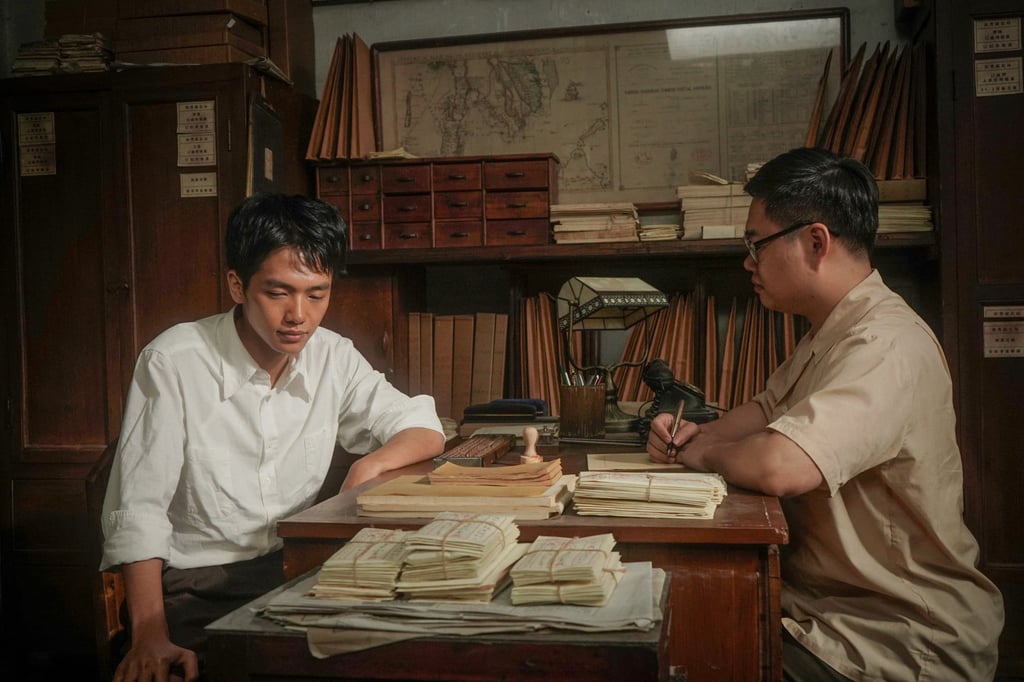
Wang Yantong (left) and Chen Qinqin in a still from Dear You. The film, which has become a surprise box-office hit in mainland China, features dialogue mostly in the Teochew dialect of eastern Guangdong.
I have a personal connection with Teochew. Growing up, I attended a church where it was the principal language spoken. Decades later, I can still recite the entire Lord’s Prayer in Teochew, a feat that still surprises me.
Advertisement
Teochew people are often associated with entrepreneurial success, distinctive cuisine and a far-flung overseas diaspora. Yet behind these familiar images lies a rich history stretching back thousands of years.
The Teochew homeland, which is known in Mandarin Chinese as Chaoshan, encompasses the modern cities of Chaozhou, Shantou and Jieyang on the eastern coast of Guangdong province. The area was known as Jieyang during the Qin (221-207BC) and Han (206BC-AD220) periods, before becoming part of the imperial prefecture of Chaozhou. “Teochew” is the local pronunciation of “Chaozhou”.
Advertisement
Although administratively part of Guangdong today, the region has for centuries occupied a cultural borderland between Guangdong and neighbouring Fujian province, forming a single cultural sphere united by a common spoken tongue, customs and identity.