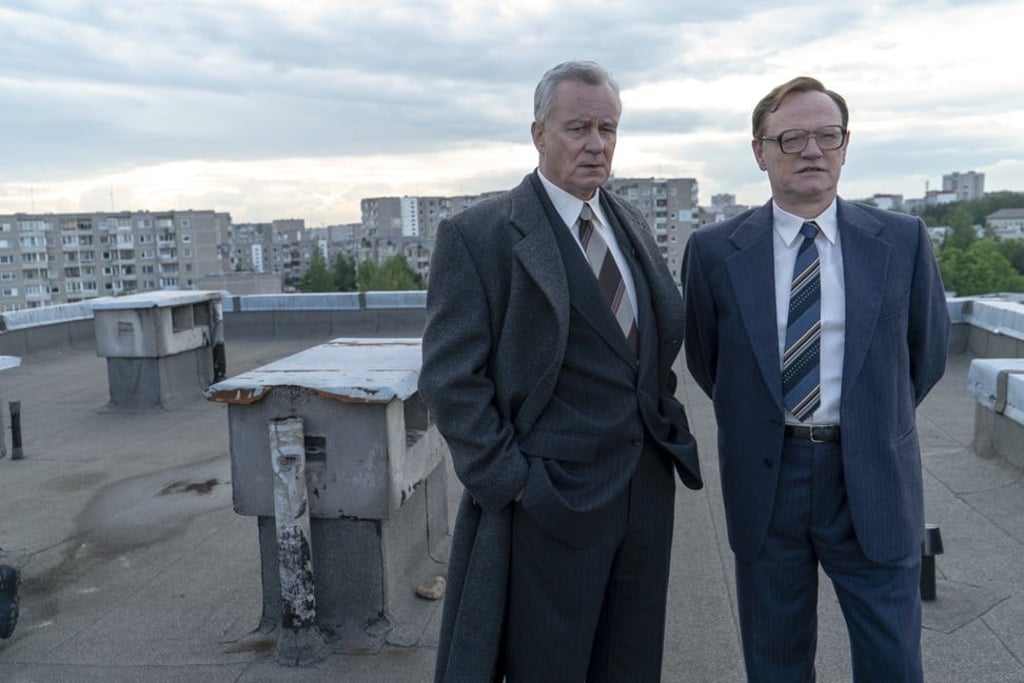
Why is Chernobyl so good? How to make a great historical TV drama
- The five-part HBO series has already attracted more than 9 million cumulative viewers, with a companion podcast proving almost as popular
- It has been helped by parallels to present political conditions, as well as its drawing on popular genres such as disaster movie and legal drama

Chernobyl isn’t the likeliest of hits.
The five-part HBO/Sky Atlantic co-production lacks the bombast of Game of Thrones , the star power of Big Little Lies, the lacerating humour of Veep. It focuses sustained attention on the intricacies of Soviet bureaucracy, the nature of fission, and the gruesome results of radiation poisoning. And yet the series, written by Craig Mazin and directed by Johan Renck, has attracted more than nine million cumulative viewers to date, according to HBO.
It has also garnered 6.5 million downloads or views for the five episodes and trailer of its companion piece, The Chernobyl Podcast, in which Mazin and co-host Peter Sagal separate fact from fiction in the series’ version of events. (That number includes 2.3 million downloads or views since June 5; the series finale aired June 3.)
“When we talk about broad audiences, we’re usually talking about art that has a fairly wide target – generally speaking, everybody can agree that this sort of thing might be exciting or fun or sad,” Mazin says in a telephone interview. “[Chernobyl] is not a broad audience kind of show, at least in my mind, but it turns out that there’s a much wider interest in this kind of storytelling than everybody expected.”