How Oldboy director Park Chan-wook brings Korean cinema to the world with his brutal yet elegant films
- By combining human ugliness with cinematic elegance in a random and cruel world, Park turns violence into art with extraordinary power and effect
- With Boon Jong-ho’s Parasite putting South Korea on the movie map, we cannot wait to see what Park does next

South Korean writer-director Park Chan-wook makes brutal, baroque tales of vengeance. But despite being one of the world’s most distinctive filmmakers, his name is not widely known outside cinephile circles. Could that be about to change?
Park’s speciality is juxtaposing human ugliness with cinematic elegance, in the process turning violence into art. Only he could have made Oldboy ’s hammer attack – an extraordinary single-shot sequence filmed over three days – into a ballet of blunt-force trauma. Though the film won critical plaudits, including the Grand Prix at Cannes, it remains a confronting watch, particularly the scene where protagonist Oh Dae-su (Choi Min-sik) eats a live octopus.
“In the experience of watching my film, I don’t want the viewer to stop at the mental or the intellectual,” Park told The New York Times. “I want them to feel my work physically. And because that is one of my goals, the title ‘exploitative’ will probably follow me around for a while.”
Park’s first two films – 1992’s The Moon Is … The Sun’s Dream and 1997’s Trio – disappointed, but he hit the jackpot with the 2000 thriller Joint Security Area. Based on Park Sang-yeon’s novel DMZ, it concerns a shooting in the demilitarised zone between North and South Korea, and went on to become the country’s highest-grossing film ever at the time.
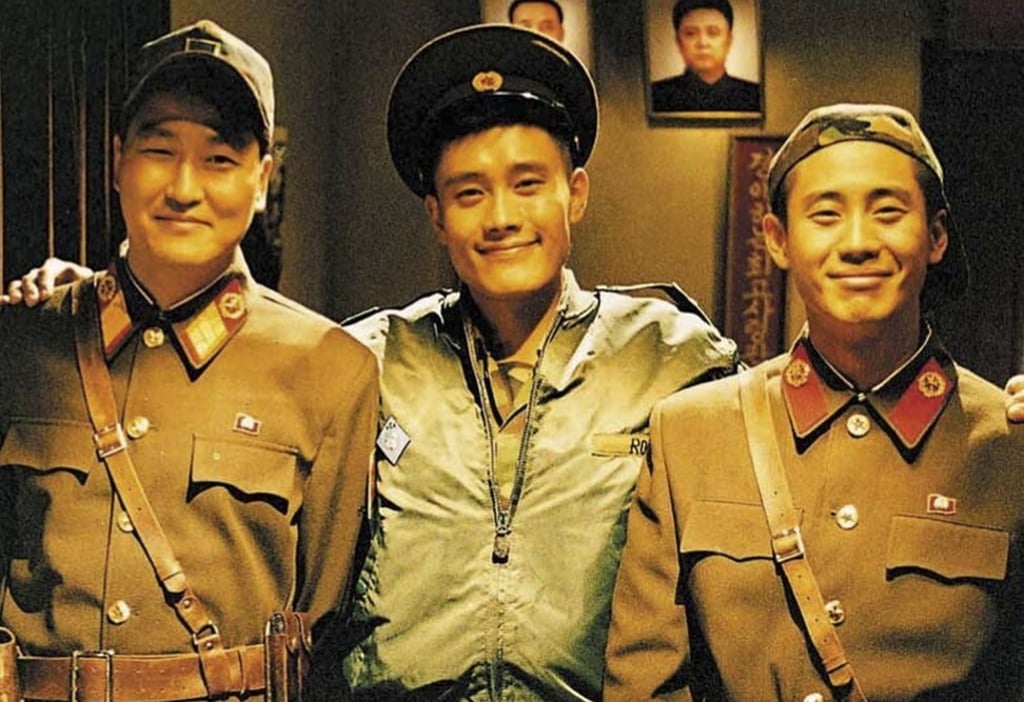
With carte blanche to do as he wished, Park made the Vengeance Trilogy, which brought him international attention while solidifying his themes of, as The Guardian put it, “abduction, imprisonment and retribution”.
In Sympathy for Mr Vengeance (2002), the deaf-mute protagonist Ryu (Shin Ha-kyun) finds himself trapped in a kidnapping plot that can only end in disaster. Oldboy’s Oh Dae-su is locked in a hotel room for 15 years because of something he did as a boy. Meanwhile, Lady Vengeance’s Lee Geum-ja (Lee Young-ae) spends 13 years in prison for a murder she did not commit. In each of these films, the world is random and cruel, and seeking revenge only make things worse for everyone.