A Hong Kong mother worries her son’s maths lessons are too much fun
Children learn better through games and activities than old-fashioned structured and formal lessons, although the basic skills are vital, too

My son’s primary school recently organised a maths information evening for parents. The focus was mainly maths games and practical activities. While I can see these types of processing are fun for children and have some value, there seems to be a lack of formal teaching in the curriculum. The importance of learning multiplication tables was not even mentioned.
The teaching of maths today is a far cry from the endless repetition of number facts and standard textbook problems that many parents experienced when they attended school. Maths lessons are now generally far more fun, practical and relevant than they ever were.
Some parents are scarred from the negative experiences they had doing maths at school and have been completely put off the subject. It is possible that the teachers at your son’s school tried to make this workshop engaging for parents to show that the subject can be fun and interactive in order to dispel its traditional reputation of being difficult and dull.
It is well documented that in order for children to learn to their full potential they need to be engaged, motivated and appropriately challenged. Maths games are an excellent tool for learning numerical and general mathematical concepts especially in the younger primary years. Playing problem solving-type games in particular often requires strategic awareness and lateral thinking skills. The added element of pupil competition can be a powerful incentive for some.
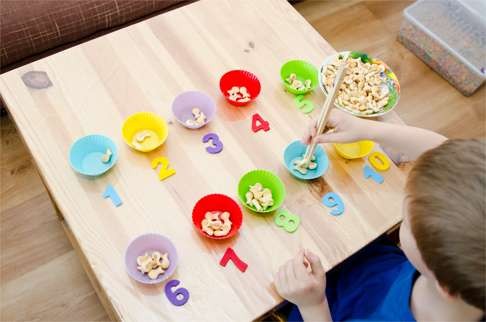
Nothing motivates primary students more than having fun. When students are fully engaged in an enjoyable learning activity they are channelling powerful emotions that help the flow of blood to specific areas of the brain, and this enhances their capacity to learn. Anybody watching a group of students, who sometimes have difficulty concentrating, persisting at a challenging maths game with enthusiasm and passion, would agree.
One good lesson incorporating these elements is worth a dozen others in which students are frustrated and bored, and unable to interact with concepts that have no meaning for them. Rigour in the maths curriculum may not be immediately obvious to the casual observer but this does not mean it isn’t there.