Fiction unlocks a more meaningful world for young readers
My love of reading and all that I've gained from it define me as much as my relationship and life experiences. I am confident that my children will also be shaped by the books in their lives and by the rich reading environment in which they are being raised.
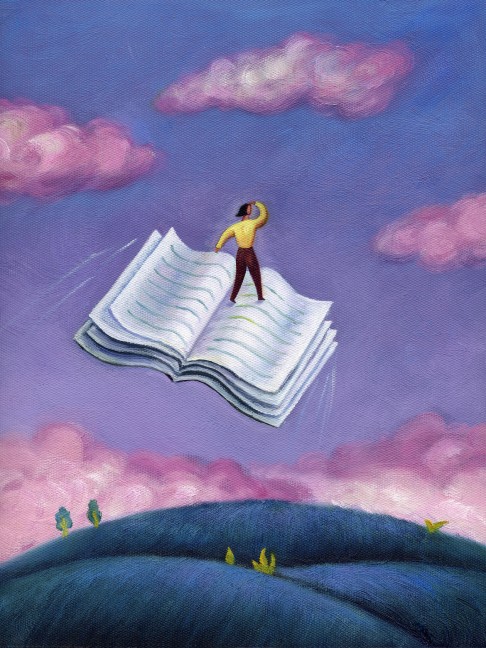
My love of reading and all that I've gained from it define me as much as my relationship and life experiences. I am confident that my children will also be shaped by the books in their lives and by the rich reading environment in which they are being raised. However, my passion for reading also stems from learning about how reading can change brain development and enrich lives.
Three things I recently learned about reading have further fuelled this passion.
First, bigger vocabulary leads to faster thinking. Second, fiction allows readers to develop the so-called theory of mind. And third, bibliotherapy is not literature.
It is widely acknowledged that children who read for pleasure learn more words than those who do not. Daniel L. Everett, in his study of the Piraha people of the Amazon, took this a step further and examined the implications of a broader vocabulary. He found that the Piraha are able to recognise quantities despite not having any words for numbers or counting in their language. However, they had poor memory for quantities due to their lack of such terms. Words are basically labels. And when you can assign a label to a concept, your brain can better process, retain and retrieve that label. Therefore, it is posited that people with a broader vocabulary think more quickly. And building vocabulary by reading is much more enjoyable than through flash-cards.
Reading fiction has an effect on the brain that is not achieved with reading non-fiction. While a sports fan would gain information by reading a book on baseball history, they would gain more insight from W.P. Kinsella's Shoeless Joe. Fiction allows readers to be transported to the world inhabited by the books and gives a glimpse of environments and situations they have not experienced.
Fiction also offers readers an opportunity to be privy to the thoughts and feelings of others.